Digging Into Isopropanol: More Than Just a Simple Solvent
Tracing the Journey: Historical Development
Back in the early 1920s, folks saw huge value in hunks of crude oil beyond just lighting lamps. Chemists working on hydrocarbon research took a shot at cracking propane and wound up with a new liquid that packed a punch both in hospitals and workshops. Commercial production got rolling in the United States not long after, with isopropanol (sometimes called isopropyl alcohol) quickly earning a reputation for being stronger and less toxic than methanol or pure ethanol. Over the years, demand shifted from medical disinfectants to cleaning electronics, then on to use in everything from paint thinners to dabbing ink off printing presses. What’s gone unchanged is its role as one of the world’s most useful chemicals, wedged snugly between the industrial behemoths and the small first-aid kit.
Product Overview: What Is Isopropanol?
Isopropanol sits on pharmacy and hardware shelves as a clear, flammable liquid. Chemists shorten its full name, 2-propanol, down to rubbing alcohol in everyday talk. Its molecular tag, C3H8O, hints at the structure: three carbon atoms, bunched with a hydroxyl group, bringing good cleaning and dissolving power. Most folks spot it in 70% or 99% concentrations, giving an idea of its range. Whether cleaning a stubborn headlight, prepping a syringe, or thinning down paint, isopropanol plays its part quietly.
Physical & Chemical Properties
Pour a capful and the sharp, sweet smell can cause a nose to wrinkle. Boiling starts at 82.6°C, and the stuff evaporates quickly. With a density of about 0.786 g/cm³ at 20°C, it weighs less than water. Its high flammability means one spark near an open container could mean trouble, and the flash point hovers near room temperature, about 12°C. It mixes with water, most oils, and many other solvents, which lets it jump into dozens of roles in industry and medicine. But pour it over a polystyrene cup and the cup will melt—one quick lesson in solvent compatibility.
Technical Specifications & Labeling
Bottles bear plenty of information: grade (from technical to USP or reagent), percentage purity, proper warnings, and clear batch numbers. Good labeling saves headaches during inspection and helps anyone needing to check standards like ASTM D770 or European Pharmacopeia for raw material sourcing. Color codes on industrial jugs help labs keep hazardous materials apart. Each label matters in real-life decisions, like making sure an electronics tech isn’t using the wrong blend for high-precision circuit boards, or ensuring lab samples won’t introduce contaminants.
How It’s Made: Preparation Method
Two routes dominate—direct hydration of propylene using water and acid at high pressure, or the older indirect path, where sulfuric acid first reacts with propylene and then water splits off isopropanol. Raw material sourcing changes with oil prices and refinery schedules, being a close cousin of other propylene byproducts. For labs or anyone mixing their own, dilution with distilled water produces custom concentrations for specific cleaning, disinfection, or reaction setups. The industrial process lets companies maintain tight purity controls, especially when the finished product lands in chemical synthesis or direct medical use.
In The Lab: Chemical Reactions & Modifications
Toss isopropanol into the right setup and chemistry gets interesting. Oxidize it under gentle conditions and acetone pops out, a pathway relied on by chemical plants the world over. Chemists use it to reduce aggressive reagents, pop protons off molecules, or extract active ingredients thanks to a nice mix of volatility and solvent power. In many organic syntheses, it cuts down labor by rinsing away reaction leftovers without damaging sensitive molecules. All these tweaks wouldn’t land in textbooks if isopropanol didn’t balance stability with the right touch of reactivity.
What’s In A Name: Synonyms & Product Names
Depending on where you shop or work, this chemical goes by several tags. Isopropanol, isopropyl alcohol, rubbing alcohol, and 2-propanol all name the same stuff. CAS number seekers jot down 67-63-0. In paint shops, it’s just ‘IPA’, in labs, bottles might sport ‘isopropanol, reagent grade’. Some pharmaceuticals follow local language or national standards, listing it as alcool isopropylique in France, alkohol isopropylowy in Poland. For emergency responders, knowing every label could mean a safer response to a spill or accident.
Staying Safe: Safety & Operational Standards
Every worker who handles isopropanol learns to keep it away from ignition sources. Fire marshals read MSDS sheets and stress storage away from oxidizers or acids. Spills mean slipping hazards; breathing vapors indoors could spell dizziness or headaches. Gloves and goggles aren’t overkill, given its fast evaporation off skin and the risk of eye damage. Ambulance crews carry industrial-grade hand rubs made with it, knowing that uptake through skin rarely crosses toxic thresholds. Local agencies and regulators lean on standards from OSHA and EPA, both to keep users safe and ensure proper disposal of bulk quantities.
Real-World Uses: Application Area
Isopropanol wipes down surgery tables and cell phones with the same ease, stripping away bacteria and leftover oils. In automotive shops, it cleans windshields and degreases tight metal parts. Microchip assembly floors trust it for pure, residue-free cleaning without damaging sensitive circuits. Painters and artists rely on it to thin inks and paints, and barbers rub down scissors and clippers. As COVID-19 swept through towns, hand sanitizer bottlers and cleaning supply makers burned through global supplies. Wherever cleaning, sterilizing, or quick-drying is needed, this versatile liquid takes the spotlight.
Innovation on the Horizon: Research & Development
R&D teams work on ways to use isopropanol beyond traditional cleaning or chemical feedstock roles. One pocket of innovation looks at blending it in sustainable fuel options for backup generators or field stoves. Others develop new uses in pharmaceutical transport, exploring how it acts as a carrier solvent for sensitive molecules in fast-developing therapies. Lab groups test how it affects new antimicrobial coatings, chasing breakthroughs for hospital and consumer safety. Much of this research happens quietly, embedded in the background of bigger projects, yet almost every year brings a new patent or laboratory technique that tweaks our collective understanding.
Toxicity Research
Talk with ER doctors or poison control staff and they’ll tell you isopropanol poisoning happens most from accidental swallowing or, less often, risky attempts at self-medication. It attacks the nervous system quickly, with vomiting, dizziness, and in high doses, respiratory depression. Years of animal research mapped the fine line between a safe clean and dangerous exposure. Long-term studies found no strong link to cancer, setting it apart from some other solvents. In industry, routine airborne monitoring and smart ventilation protect workers, thanks to research done over decades. Regulation and training, not just personal protective gear, set the difference between safe use and unexpected trips to the ER.
Eyes On Tomorrow: Future Prospects
Producers watch climate priorities and see chances to make greener isopropanol from biomass-derived propylene, easing pressure on oil. Growing electronics manufacturing, pharmaceutical needs, and consumer demand for sanitizers signal steady growth. Innovators pitch new uses in advanced composites or next-generation battery manufacturing, banking on isopropanol’s purity and solvency. Automation in packaging and bulk handling targets fewer workplace accidents. Environmental activity pushes recycling methods for spent solutions or waste streams that used to go straight to incinerators. With technology and tradition both pushing forward, isopropanol seems set to keep its spot as a quiet but crucial staple in labs, factories, and households everywhere.
More Than Just a Bottle on the Shelf
Anyone who has ever cleaned a wound or wiped down a phone screen already knows isopropanol. It’s a clear liquid with a strong, sharp smell that’s everywhere—tucked in medicine cabinets, hospital carts, factories, and garages. On my desk, I keep a little spray bottle filled with a simple mix of isopropanol and water; my computer keyboard and phone thank me for it.
Why Hospitals and Clinics Rely On It
Doctors and nurses reach for isopropanol every day. The Centers for Disease Control and Prevention says alcohol-based sanitizers with isopropanol kill most bacteria and viruses quickly. In the time it takes to sip a cup of coffee, hands get disinfected and germs stop dead in their tracks. Hospitals can’t afford to run out of such a useful tool. I watched my elderly father’s nurses clean their hands and his IV site with it countless times, and he never developed even a hint of infection.
Surgical tools, thermometers, and even patient beds get a wipe-down with isopropanol. It doesn’t just remove germs—it evaporates quickly so there’s no puddle left behind, and the patient can get on with what matters most: healing.
Households and Small Businesses Trust It
The pandemic taught the world to respect cleaning routines. Isopropanol wipes out sticky messes, smudged fingerprints, and grease that regular soap can't touch. My neighbor, who runs a small tattoo studio, never skips a surface—he cleans his equipment every day with isopropanol. In places where food safety means everything, like restaurant kitchens, countertops get a fast clean without waiting for surfaces to dry.
Electronics Aren’t Afraid of It
Gadgets need gentle hands and something that won’t destroy their delicate parts. Isopropanol fits the bill. It evaporates fast and doesn’t leave behind gunk or moisture that could short-circuit a phone or computer chip. I’ve repaired my fair share of sticky remotes and grimy keyboards with nothing but cotton swabs and isopropanol.
The electronics industry counts on this chemical. Circuit boards take a splash after soldering. Dust, oils, and solder flux don’t stand a chance, and expensive devices stay up and running.
Car Shops and Beyond
Drive past any auto mechanic and you’ll smell it in the air. Grease, sticker residue, and road dirt disappear with a few swipes of isopropanol. It helps body shops prep surfaces for painting, leaving nothing for the fresh coat to peel from. Some folks mix a bit into their windshield washer fluid to fight ice, because the alcohol cuts through frost better than water ever could.
Risks and Better Habits
Not everything about isopropanol is rosy. It’s flammable, and headaches or worse can follow if fumes build up in a closed space. Younger kids sometimes swallow it by accident, which can turn a simple cleaning job into a visit to the hospital. Smart storage and a little common sense go a long way.
With proper use and attention, we get the benefits without the downsides. I always label my bottles and keep them far from curious pets and hands that haven’t finished growing.
Final Thoughts
Isopropanol doesn’t just clean; it protects, speeds up work, and keeps both people and gadgets healthy. It does its job without stealing the spotlight, working on every countertop and circuit board with quiet efficiency.
How Isopropanol Works on Skin
Isopropanol, also known as isopropyl alcohol or rubbing alcohol, pops up in most medicine cabinets and first-aid kits. People trust it for cleaning wounds, disinfecting surfaces, and even sanitizing hands. Splash a bit on your skin, and it starts working against germs right away. Isopropanol breaks down the protective layer of bacteria and some viruses. That’s the reason it cleans so well—it punches holes in those tiny organisms and wipes them out.
What Research Tells Us About Safety
Plenty of research backs up the use of isopropanol as a skin disinfectant. Hospitals use it before injections or drawing blood. The World Health Organization lists it in its recommended hand rub formulations for killing viruses like the ones causing COVID-19. Alcohol-based sanitizers containing at least 60% isopropanol or ethanol can do the job quickly, which helped many people during the pandemic.
On healthy, unbroken skin, isopropanol rarely causes trouble if used right. I remember my first scratch and reaching for that brown bottle. It stung a little, but the cut cleaned up quickly. Healthcare workers use it dozens of times a day for the same reason—it’s consistent and reliable.
Downsides and Risks
Not everyone gets off scot-free. Use too much isopropanol, and skin dries out fast. That tightness and flakiness come from the way alcohol strips oils away. Some people see redness, itching, or cracks, especially after repeated use. Kids can suffer more from this, since their skin works as a weaker barrier. Getting it on open wounds or broken skin cranks up the sting and, in rare cases, lets the alcohol seep deeper, causing irritation. Swallowing isopropanol causes much bigger problems, from severe stomach upset to coma, but that's a different discussion.
A Canadian study in 2021 looked at frequent hand sanitizer use and found increased cases of contact dermatitis among healthcare workers. This agrees with what those on the front lines saw: dry, irritated hands after weeks of shuffling between sanitizer and soap. Some people tried switching to gentler washes or added moisturizers, but the problem didn’t vanish overnight.
Practical Ways to Stay Safe
Moderation counts. For most people, a dab here or there to clean up after gardening, working with tools, or handling money keeps things safe. Moisturizing afterward helps restore what alcohol takes away. Avoid applying isopropanol to sensitive parts like the eyes, mouth, or large areas where the skin’s broken. If rashes, burning, or peeling follow, it’s smart to cut back and seek help from a dermatologist—especially if there’s a history of allergies or eczema.
Alternatives and Precautions
Soap and water still work wonders. For most dirt and germs, washing hands with soap and running water gets plenty of good results, especially if the skin already feels dry. In settings like restaurants or clinics, sticking to official hand rubs and following label instructions goes a long way. Store bottles away from children and out of reach, since the clear liquid can attract curious hands.
Isopropanol brings confidence for households and hospitals alike, but like most tools, it rewards careful use. Pay attention to your skin, hold back from overuse, and bring in some moisturizer. That way, its cleaning punch comes without unwanted side effects.
Why These Two Alcohols Matter in Everyday Life
Many people think about alcohol as just something found in a bottle, but in reality, different types of alcohol play a quiet but huge role in daily life. Isopropanol and ethanol live in medicine cabinets, under kitchen sinks, and in laboratories. Despite sharing some uses and even similar smells, these two alcohols bring different strengths, weaknesses, and safety issues.
Molecular Makeup and Why It Counts
Isopropanol’s formula is C3H8O, where as ethanol is C2H6O. That extra carbon in isopropanol makes it a little bulkier. This difference shapes everything from how each evaporates to how your skin or organs handle them. In high school chemistry, I learned firsthand that mixing the wrong alcohol for an experiment either gives odd results or someone ends up getting a nasty headache from the fumes.
Disinfecting Power and Everyday Uses
Ethanol often winds up in hand sanitizers, mouthwashes, and even as a fuel additive. At 70% concentration, it knocks out a wide range of bacteria and viruses. Isopropanol, sometimes called rubbing alcohol, works in nearly the same way. Both clean wounds or surfaces, yet their toxicity makes a stark difference.
Rubbing alcohol once felt like the tough guy in my old first-aid kit. It stings, dries fast, and kills germs. But, make the mistake of accidentally getting some in your mouth and you’ll notice isopropanol’s real danger. Withdraw a swig of ethanol and, as millions know, you just had a sip of vodka. Swallow isopropanol, and you could land in the emergency room fast. Poison control centers across the country have seen too many kids and adults get very sick after confusing these bottles.
Health and Safety Issues No One Should Ignore
Ethanol sees use in drinks because it breaks down safely—at least in reasonable doses. Isopropanol, on the other hand, gets broken down into chemicals that attack organs more aggressively. Livers have a tough time with it. In one real-world example, a local hospital treated a patient who drank isopropanol in a desperate attempt to get drunk. The result: kidney trouble, severe vomiting, and a lengthy recovery.
Both alcohols dry out skin, so handing large bottles of either to children would be a mistake. Chronic exposure through the skin or breathing in big doses over time may lead to trouble. That’s been shown in workplace studies on cleaning staff or industrial workers.
Regulation, Access, and Risk
Ethanol faces restrictions for good reason. Denatured alcohol, which is ethanol mixed with additives to discourage drinking, gets sold in hardware stores for cleaning or as fuel. Isopropanol gets lighter regulation and sits on shelves in most pharmacies. Both demand clear labeling and safe packaging. This sounds obvious, but recently, hand sanitizer recalls in the United States cropped up after isopropanol ended up in bottles labeled for safe use. Such incidents tell us that clarity and transparency in labeling matter.
Smarter Choices for Safer Living
A clean home, a stock of first-aid supplies, and even the routine of washing hands all depend a lot on using the right alcohol. Relying on trusted brands, avoiding decanting these chemicals into unmarked containers, and teaching kids and adults basic safety go a long way. Schools and workplaces can give short, practical training so that everyone understands the real risks and best practices. If medical grades of either alcohol are used, following precise instructions from labels and health authorities keeps families and staff much safer.
Bottom line: Know what kind of alcohol sits in your home or workplace, respect its risks, and use it as intended.Why Proper Storage Matters
Any time someone keeps isopropanol on hand, safety should come first. I’ve seen the effects of not taking chemicals seriously—spills, ruined equipment, or worse, people suffering burns or respiratory problems. Isopropanol evaporates fast, and the fumes get strong in a hurry. Flammable liquids like this call for careful handling both at work and at home.
Common Risks From Careless Storage
Isopropanol packs a punch in cleaning power, but the same qualities make it dangerous. Vapors ignite at low temperatures and open flames catch them quickly. I’ve watched old, dented cans leak all over a shelf in a storeroom before anyone noticed. Fumes build up around poor seals or from open containers. Some folks don't realize that even a splash outside a bottle can spread fumes into a room or fill up an unventilated cupboard.
Key Steps for Safe Storage
Solid habits matter most for safety:
- Pick the Right Container: Never trust a flimsy bottle. Tough, tightly sealed containers—preferably made from high-density polyethylene—hold up better against leaks and drops. Once, a glass bottle slipped through sweaty hands in my garage and shattered. Those shards stuck around for months. Keep isopropanol away from glass in busy spaces if there’s any chance of dropping it.
- Keep It Cool and Dry: Warm places crank up the risk of fires. Store bottles in a well-ventilated spot away from direct sunlight, stoves, and heaters. At the small print shop where I worked, bottles went in a metal cabinet rated for flammable liquids, never under sinks or random drawers.
- Label Everything: Accidents happen fast when bottles get mixed up. Labeling helps anyone nearby make smart decisions without hesitation. A visible, clear label listing contents and hazard warnings has stopped a few close calls in my time.
- Separate From Incompatibles: Mixing isopropanol with strong oxidizers or acids creates real hazards. One summer, a neighbor learned that the hard way after storing cleaning chemicals together under the sink. A quick knockover nearly caused a reaction. Keep a clear distance from bleach, hydrogen peroxide, or any reactive chemicals.
- Use Approved Cabinets for Larger Amounts: Regulations differ, but above a certain volume—usually five gallons—flammable chemical storage cabinets become a must. A good one with self-closing doors and sturdy shelves helps prevent disaster.
Regulatory Guidance and Community Tips
Looking for ways to improve safety, I've found OSHA and NFPA rules easy to follow. OSHA’s standard 1910.106 outlines requirements for storing flammable and combustible liquids. NFPA 30 offers best practices too. Their tips are not just for big companies. Most people do better sticking to these rules at home as well, especially if kids or pets are around.
I’ve also seen neighbors swap advice on local forums—reminding each other not to store chemicals in basements near hot water heaters, and to keep backup absorbent materials in storage areas. Paper towels won’t cut it if a big spill happens, and sand or special chemical absorbents work far better.
Smart Disposal Finishes the Job
After finishing a bottle, treating leftover isopropanol as hazardous waste keeps problems away. Dumping it down the drain causes environmental harm and can even damage plumbing. Local recycling centers or hazardous waste facilities accept small quantities. In one neighborhood event, we pooled our unused chemicals to drop them off together. That approach saves money and cuts risks for everyone.
Simple, repeatable steps draw the line between disaster and safety with isopropanol. Respect the risks, make careful choices, and this handy solvent continues to help without causing harm.
Everyday Encounters with Isopropanol
Isopropanol shows up almost everywhere: household disinfectant sprays, supermarket wipes, hand sanitizers, electronics cleaning, even in hospitals. At a glance, this alcohol seems pretty harmless, maybe even comforting when used to wipe down shopping carts. It kills germs fast and evaporates clean without leaving sticky streaks. People rely on it for good reason. But many overlook the downside: like a lot of alcohols, isopropanol can cause real harm if used carelessly.
The Facts: How It Affects the Body
Contact with the skin rarely causes issues, aside from dryness or irritation after repeated use. But things change quickly if people start inhaling a lot of vapor, swallowing even small amounts, or handling large volumes without proper airflow. Isopropanol depresses the central nervous system, much like ethanol does. Swallowing as little as 15 to 30 milliliters—that’s a shot glass or two—can lead to dizziness, slurred speech, and drowsiness. Severe poisoning can cause respiratory issues, low blood pressure, and in extreme cases, coma. There have even been fatal accidents involving kids and adults who mistakenly drank isopropanol, thinking it was safe like regular alcohol.
Breathing vapors over an extended period isn’t harmless either. Headaches, confusion, nausea, and breathing problems have all been reported in workplaces without good ventilation. In my own lab days, a coworker once felt faint after wiping benches for an hour with little airflow. It served as a wake-up call to crack open some windows and take breaks, even if the product felt familiar and “safe.”
Missteps at Home and at Work
A lot of the risk comes from how people use it. Bottling isopropanol in clear, unmarked containers at home can make it look like water. Fragrance or no color means someone takes a sip by mistake. In certain jobs, poorly maintained equipment can leak vapor, or workers degrease parts in cramped rooms. Safety data backs all this up: the CDC warns that nearly 4000 accidents related to isopropanol poisoning get reported each year in the US, more than half of them at home.
Taking Safety Seriously
I always stress reading the label, knowing the difference between isopropanol and drinking alcohol, and keeping it out of reach of kids. Polishing your phone or desk with a squirt now and then might seem minor, but switching to gloves helps if you notice your hands drying or cracking. In workplaces, fans and open windows make a real difference. For businesses, choosing containers that don’t confuse anyone—bright labeling, child-resistant caps—shows real care for everyone.
Doctors and poison hotspots get calls about these accidental exposures all the time. Training sessions and simple posters in high-use areas remind people what goes wrong when shortcuts get taken. Some hospitals now lock isopropanol in cabinets along with stronger chemicals, which keeps accidental poisonings down.
Finding a Balance
Isopropanol’s strengths make life cleaner and safer. But anything strong enough to kill germs deserves healthy respect. Clear instructions, good habits, and some common sense prevent a handy product from turning into a household hazard. The lessons aren’t complicated: treat it with care, keep it out of drinks and off your skin for long stretches, and always let fresh air in. Respect for its effects goes a long way to keeping families and workers safe.
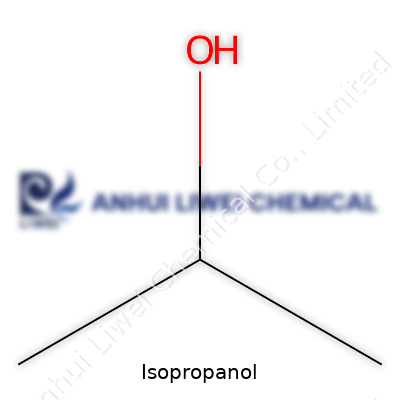
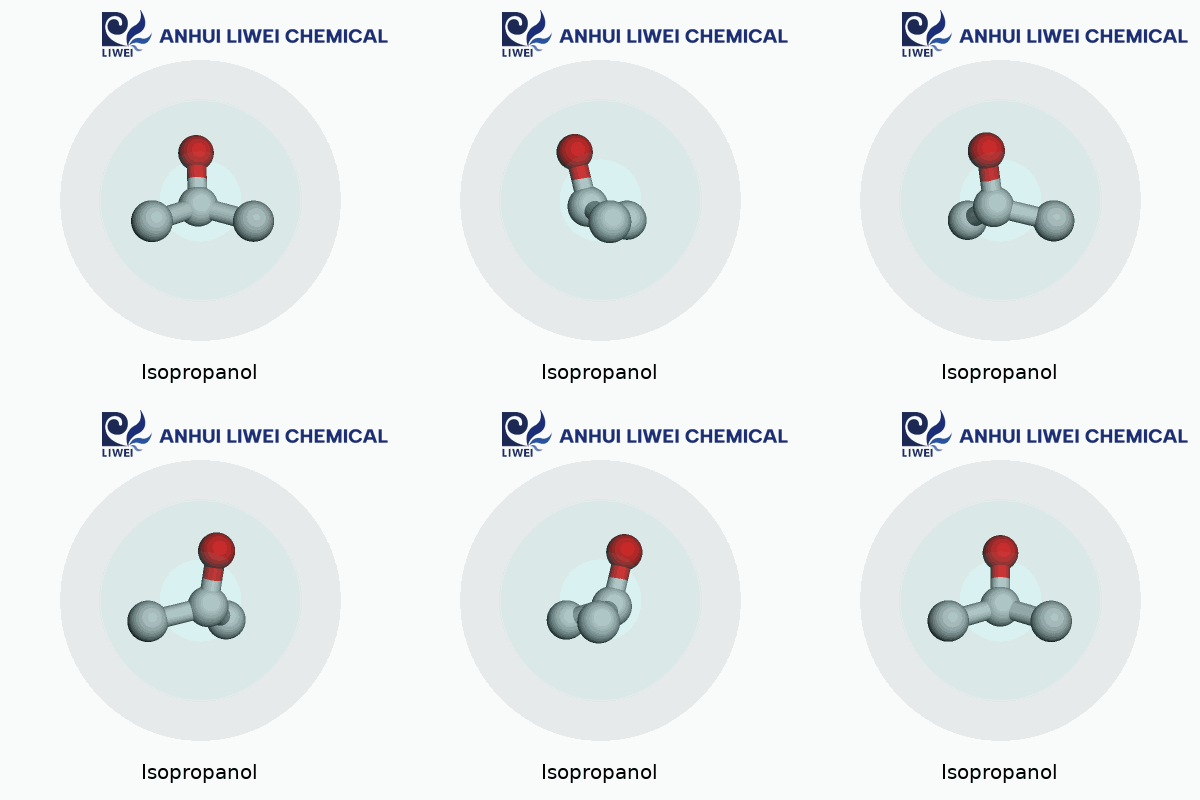
| Names | |
| Preferred IUPAC name | propan-2-ol |
| Other names |
isopropyl alcohol
2-propanol propan-2-ol IPA rubbing alcohol dimethyl carbinol |
| Pronunciation | /ˌaɪsəˈprəʊpənɒl/ |
| Identifiers | |
| CAS Number | 67-63-0 |
| 3D model (JSmol) | load $3776 |
| Beilstein Reference | 635639 |
| ChEBI | CHEBI:17824 |
| ChEMBL | CHEMBL582 |
| ChemSpider | 7864 |
| DrugBank | DB02378 |
| ECHA InfoCard | 100.000.755 |
| EC Number | 200-661-7 |
| Gmelin Reference | No Gmelin Reference |
| KEGG | C01847 |
| MeSH | 2-Propanol |
| PubChem CID | 3776 |
| RTECS number | NT8050000 |
| UNII | ND2M416302 |
| UN number | UN1219 |
| Properties | |
| Chemical formula | C3H8O |
| Molar mass | 60.096 g/mol |
| Appearance | Clear, colorless liquid |
| Odor | sharp, alcohol-like odor |
| Density | 0.786 g/cm³ |
| Solubility in water | Miscible |
| log P | 0.05 |
| Vapor pressure | 4.4 kPa at 20 °C |
| Acidity (pKa) | 17.1 |
| Basicity (pKb) | 17.2 |
| Magnetic susceptibility (χ) | -45.2 × 10^-6 cm^3/mol |
| Refractive index (nD) | 1.377 |
| Viscosity | 2.4 cP |
| Dipole moment | 1.66 D |
| Thermochemistry | |
| Std molar entropy (S⦵298) | 180.6 |
| Std enthalpy of formation (ΔfH⦵298) | -318.1 kJ/mol |
| Std enthalpy of combustion (ΔcH⦵298) | -2005.8 kJ/mol |
| Pharmacology | |
| ATC code | D08AX03 |
| Hazards | |
| GHS labelling | Danger; GHS02, GHS07; H225, H319, H336; P210, P233, P240, P241, P242, P243, P261, P264, P271, P280, P303+P361+P353, P304+P340, P305+P351+P338, P312, P337+P313, P370+P378, P403+P233, P405, P501 |
| Pictograms | GHS02 GHS07 |
| Signal word | Danger |
| Precautionary statements | P210 P233 P240 P241 P242 P243 P261 P264 P270 P271 P280 P303+P361+P353 P304+P340 P305+P351+P338 P337+P313 P370+P378 P403+P233 P405 P501 |
| NFPA 704 (fire diamond) | 1-3-0 |
| Flash point | 11.7 °C (53 °F) |
| Autoignition temperature | 399°C |
| Explosive limits | 2% - 12% |
| Lethal dose or concentration | LD50 (oral, rat): 5045 mg/kg; LC50 (inhalation, rat): 16,000 ppm (8 h) |
| LD50 (median dose) | 5045 mg/kg |
| NIOSH | TWA 400 ppm (980 mg/m³); STEL 500 ppm (1225 mg/m³) |
| PEL (Permissible) | 400 ppm TWA |
| REL (Recommended) | TWA 400 ppm (980 mg/m3) ST 500 ppm (1225 mg/m3) |
| IDLH (Immediate danger) | 2000 ppm |
| Related compounds | |
| Related compounds |
Acetone
1-Propanol 2-Butanol tert-Butyl Alcohol Diisopropyl ether Isopropyl acetate Propene 2-Chloropropane Ethanol Methanol |


