Fluorobenzene: A Down-to-Earth Look at a Versatile Chemical
Historical Development
Fluorobenzene didn’t show up overnight; chemists in the late 1800s started tinkering with aromatic compounds, and the push for new organic molecules brought it into the spotlight. As other halogenated benzenes started getting industrial attention, researchers discovered that swapping a hydrogen atom on benzene with a fluorine atom led to some unexpected stability, compared to cousins like chlorobenzene or bromobenzene. Early methods relied on tough and sometimes risky reagents, making lab yields limited, but by the mid-twentieth century, better synthetic paths and growing demand for fluorinated organics made this chemical accessible on a larger scale. Big pharma, materials science, and agrochemicals expanded the reach of fluorobenzene, pushing scientists to explore more responsible manufacturing, so today’s commercial operations look nothing like their harsher historical roots.
Product Overview
Walking through any industrial chemical catalog today, fluorobenzene often shows up on the shelf somewhere between solvents and starting materials. It doesn’t make headlines like more complex fluorinated compounds, but it does essential work. In my own research days, I saw it pop up as a solvent and a key intermediate—its relative simplicity made it a stand-in or precursor; companies looking for strong C–F bonds often land on this molecule. As an aromatic compound with a single fluorine atom attached, the balance between stability and reactivity gives growers, engineers, and pharmacists plenty of options, making it much more than just a building block.
Physical & Chemical Properties
Anyone who has handled fluorobenzene will remember its sharp, chemical odor—less pungent than toluene but hard to miss once opened. The liquid is colorless and stays liquid at room temperature, with a boiling point of about 85°C and a melting point nearly twenty degrees below freezing. Don’t expect it to dissolve in water; it floats right on top and barely mixes. It swirls together easily with standard organic solvents like ethanol, ether, or acetone. That fluorine atom gives it a higher density than benzene and bumps up its chemical stability, especially when dealing with acids or bases. I’ve noticed that the C–F bond, unlike a C–H bond, shrugs off most attempts at straightforward addition or substitution—making this compound a bit stubborn for chemists wanting to swap out the fluorine under mild conditions.
Technical Specifications & Labeling
Dealing with fluorobenzene in a laboratory or warehouse means trusting labels and certificates: purity levels commonly start at 99%, and water content always calls for attention, since water contamination changes reaction outcomes. Each bottle comes with a CAS number (462-06-6), molecular formula (C6H5F), and details on storage—usually in a cool, well-ventilated space and away from sources of ignition. Regulatory paperwork follows it across borders, and international guidelines make sure nobody mixes up shipping containers of this aromatic compound with more volatile organofluorines. Tech specs go beyond the label, though: the right certificate should let a buyer check for potential contaminants, traces of heavier halogenides, or stabilizers, since every application—whether for chemical synthesis, pharmaceutical use, or electronics—demands its own level of scrutiny.
Preparation Method
Making fluorobenzene at a commercial scale often involves swapping a diazonium salt intermediate. Most production methods take aniline, treat it to make the benzene diazonium salt, and then let it react with fluoroboric acid, releasing nitrogen and producing fluorobenzene—this is known as the Schiemann reaction. It’s a dance of strong acids, careful temperature control, and safety measures, since the byproducts can be hazardous. This process replaced older, less efficient routes, such as direct fluorination of benzene, which ran the risk of more heavily fluorinated products and violent reactions. Chemical engineers monitor reaction conditions and purification steps closely to keep both yields high and impurities low. In research labs, smaller-scale syntheses can still rely on similar principles, but handling diazonium intermediates always demands respect—a lesson I learned quickly as an undergraduate, after one carelessly corked flask turned into a smelly clean-up operation.
Chemical Reactions & Modifications
Once produced, fluorobenzene acts as a stepping stone rather than a destination. Due to the resilience of the carbon-fluorine bond, direct functionalization around the fluorine site requires high-energy conditions or powerful catalysts—catalytic hydrogenation, lithiation, or metal-catalyzed cross-coupling reactions are tools of the trade. This chemical’s relative inertness under standard conditions makes it a choice when a researcher wants a ‘placeholder’ group that won’t budge until harsher treatment. Adding other substituents to the aromatic ring, such as nitro or amine groups, tends to happen away from the fluorine, as the electron-withdrawing character of fluorine steers reactions in specific directions. This property helps chemists build more complex fluorinated molecules, especially for use in drug development, crop protection, or fine electronics.
Synonyms & Product Names
Stepping into the lab or reading scientific papers, you’ll see a small pile of names that all mean fluorobenzene. Phenyl fluoride is a frequent alternative. Suppliers sometimes label bottles as monofluorobenzene, especially if purity or isomeric form matters. Don’t mistake it for difluorobenzenes, which have two fluorine atoms and behave quite differently. It helps to double-check the molecular formula—C6H5F—since the difference between ortho, meta, and para fluorination along the ring starts to matter as molecules get larger or more complex.
Safety & Operational Standards
Nobody should take safety for granted with any halogenated aromatic compound, especially one with industrial reach. Fluorobenzene vapors can irritate the eyes, nose, and throat and may cause dizziness or headaches if ventilation routes prove inadequate. The liquid doesn’t burn easily, but its vapors are flammable, demanding attention when working near heat or open flames. Companies and researchers alike need grounded cans, non-sparking tools, and modern ventilation. Storage in tight-sealed glass or PTFE-lined containers prevents leaks and accidental contamination. Any spill in the lab brings out nitrile gloves, lab coats, and thorough cleanup routines. Safety data sheets back up these routines with recommended exposure limits, first aid measures, and disposal guidelines, which keep both people and the environment from the hazards of accidental release.
Application Area
Pharmaceutical researchers often use fluorobenzene as both an intermediate and a probe, since adding fluorine to complex molecules can change a drug's metabolic profile and increase its biological stability. Agrochemical developers use it as a building block for pesticides and herbicides, which take advantage of both the physical and chemical stability the fluorine atom provides. Pyrotechnic companies and specialty polymer producers sometimes include it in their recipe lists. By acting as a source for further fluorination or for creating custom-tailored functional groups, this molecule bridges the gap between fine chemicals and the end products seen in fields, pharmacies, and sometimes even mobile phones or computers. Anecdotally, I’ve met more than a few colleagues who stumbled onto new reaction routes using fluorobenzene, only to find their discoveries crossing over into patent applications or new production methods.
Research & Development
Academic and corporate labs keep refining the playbook around fluorobenzene, partly because more fluorinated organics open up new worlds in drug design, crop protection, and materials science. The push goes beyond making the same compound in higher purity—teams look for selective ways to swap, break, or extend carbon-fluorine bonds, especially using milder catalysts or safer reagents. Emerging green chemistry efforts motivate work on recyclable catalysts, lower-waste pathways, and reactions staged in water instead of polar organics. Machine learning and computational modeling start to offer fresh hypotheses about where the molecule interacts, how it steers reactivity in the presence of metals or enzymes, and what real-world environmental fate might look like. More labs adopt automated process monitoring, allowing detailed tracking of byproducts and tightening up sustainability reporting.
Toxicity Research
Researchers have checked the toxicology of fluorobenzene across a range of biological systems. Acute exposure at high concentrations can cause nervous system effects, including headaches and drowsiness—risks that increase with poor ventilation or broken equipment. Animal studies point to organ-specific risks with sustained exposure, especially to the liver and kidneys. Reports on chronic low-dose effects remain limited, pushing toxicologists to keep an eye out for subtle impacts on genetic material or endocrine systems, especially since other halogenated benzenes sometimes show such problems. Environmental scientists warned about potential aquatic and soil persistence; the C–F bond’s durability means breakdown in the wild happens at a crawl. Industry response often includes investing in closed-loop systems and improving filtering or remediation strategies for water and air around manufacturing plants, which aims to curb both occupational exposure and wider ecosystem risks.
Future Prospects
The world keeps pushing for newer, smarter materials and medicines, and fluorobenzene stands in as a reliable partner for these ambitions. Synthetic chemists will likely discover safer, greener routes to this molecule, and demand from electronics and high-performance polymers looks steady. Pharmaceutical innovations, especially in cancer and infection treatment, keep favoring fluorinated products, which puts extra duty on both manufacturing scale and environmental stewardship. Growing pressure to limit environmental emissions and avoid bioaccumulative compounds means new regulations, cleaner reaction tricks, and maybe biodegradable synthetics in the longer run. Next-generation research tackles both ends: boosting productivity on one side, lowering toxicity and waste on the other. If my own experience working with small-molecule design is any indication, fluorobenzene’s role as a linchpin in chemical synthesis isn’t going anywhere soon—the molecule keeps finding new jobs in a world that keeps inventing new problems to solve.
Digging Into What Fluorobenzene Actually Does
Fluorobenzene looks simple on paper—a benzene ring with a single fluorine bolted on. There’s nothing flashy in its clear, colorless form, yet this chemical holds a solid spot in labs around the globe. Ask anyone spending long days in a research lab: some big breakthroughs start with small, almost unremarkable, ingredients like this.
Helping to Build Bigger Molecules
At many chemical plants, fluorobenzene rarely heads out the door as an end product. Most of the time, chemists use it as a starter piece in building more complicated molecules. Its most important role comes in pharmaceutical manufacturing. Big name painkillers and cancer medicines sometimes owe their existence to these humble aromatic molecules. The presence of fluorine tends to change a compound’s behavior in the body, making drugs stronger, longer-lasting, or even less toxic. As someone who’s witnessed drug discovery, I’ve seen experimental molecules where adding one fluorine changes everything—new hope for a disease, better treatment, or fewer side effects.
Agriculture, too, reaps benefits. Fluorobenzene fits into the early steps of making certain herbicides and fungicides. With food crops at risk from diseases and pests, small molecular tweaks can lead to sprays that work better or break down faster after doing their job, helping to protect the harvest without lingering in the field.
Role as a Solvent and Research Tool
Not every chemist grabs fluorobenzene to build something new. Some use it as a solvent—a medium that dissolves other stuff—to help reactions run smoothly. In the controlled world of nuclear magnetic resonance (NMR) studies, where a chemist tries to map out the structure of a completely new compound, picking the right solvent matters. Fluorobenzene’s special properties, like its stability and how it interacts with magnetic fields, give it a niche in NMR labs.
Risk and Safety: Keeping a Watchful Eye
Dealing with fluorobenzene calls for care. As with most aromatic solvents, breathing in the vapors or contacting the liquid can hurt your health. There are clear regulations dictating how workers should handle it—think gloves, goggles, and working under a fume hood—and for good reason. The environmental angle matters, too. It breaks down more slowly if released, so spills and leaks must be treated seriously right away. Living through a lab incident taught me that even chemicals used in tiny amounts can cause big problems if folks don’t respect the risks.
Making It Safer and Cleaner
People in research and manufacturing constantly look for ways to do more with less hazardous material. Newer lab methods use less solvent, recycle what they can, and swap out older chemicals for safer ones wherever possible. Some companies now track their solvent use with digital systems, noticing where waste could be slashed. For anyone working with specialty chemicals, cutting down unnecessary exposure takes planning, but it also gives you peace of mind at the end of the day.
The Value Lies in the Details
Fluorobenzene’s real strength isn't in everyday recognition or wide consumer use—it’s in how it helps other products come to life. Knowing what goes into medicines, pesticides, and specialty chemicals means understanding the stepping stones like this one. Industry and research both rely on these details, and getting them right builds not just better products, but safer and more responsible ways of making them.
What Is Fluorobenzene?
Fluorobenzene gets its name from a benzene ring with a fluorine atom attached. In the lab, it gives off a sweetish odor and doesn't mix well with water. Chemists use it as a solvent and as an ingredient in making other chemicals. Its simple structure might fool some into thinking it's safe to handle, but this stuff demands respect.
Personal Experience Highlights the Risks
I remember my first encounter with fluorobenzene as a new lab assistant. Someone spilled a tiny amount, and the entire corner of the room filled with a sharp, almost medicinal cloud. Instant reminder: a little goes a long way with these types of compounds. I learned early the importance of always protecting yourself—no shortcuts. Relying on gloves and fume hoods never felt like overkill after that episode.
Health Hazards: What Can Go Wrong?
Fluorobenzene often brings headaches, dizziness, and respiratory irritation when inhaled. A splash on skin leads to redness and potential burns. The trouble really starts if you get careless with vapor exposure—nausea, confusion, and long-term organ damage. Swallowing it? You’re in for serious trouble: liver and kidney harm show up quickly. Its effects can get amplified because your body stores it in fat. The risks aren’t theory. They’re well documented in chemical safety literature, with real-world accidents showing the price of letting your guard down.
Practical Safety Steps in Handling Fluorobenzene
Ventilation comes first. Use a certified fume hood. Don’t kid yourself with an open window or a desk fan—vapors linger and settle in unexpected places. Gaps in airflow mean you’re breathing in what you shouldn’t.
Protective gear matters. Standard lab coats and nitrile gloves serve as a barrier, but goggles are essential. A splash to the eye becomes a medical emergency. Some folks use face shields when pouring or transferring larger amounts. I’ve seen professionals forget gloves during quick jobs—most regretted it within hours.
Labeling and storage keep accidents from compounding. Fluorobenzene goes in airtight, clearly marked bottles kept far from acids or strong bases, which can trigger unwanted reactions. Flammable storage cabinets offer an extra measure of assurance against fire hazards. Mixing up unlabeled vials led to a classmate’s close call decades ago—labels are the last line of defense when fatigue hits.
Clean-up and Spill Response
Spills get immediate attention—not a problem you leave for later. Absorbent pads and well-fitted gloves become your best friends. Never mop it up with bare hands or rags; that just spreads the risk. Waste goes to designated chemical waste containers. Once, a team forgot this step, treating a chemical spill as regular trash and facing hours cleaning the workspace and dealing with the aftermath.
Emergency Preparedness
Know your eyewash and shower locations. Practice the drill. Chemical burns and inhalation problems don’t give you time to check instructions. Emergency numbers and antidote information should be posted in plain view. Responders save more than just time—they limit long-term health damage. In one workplace, regular safety drills meant nobody froze up during a real incident. That culture of preparedness makes the difference.
Smarter Solutions and Better Training
Better training reduces mistakes. Interactive workshops with spill simulations stick in memory far more than lengthy manuals. Digital logs for storage keep track of inventory and highlight expired or degraded stock before it becomes dangerous. Sharing stories about near-misses—without fear of finger-pointing—builds trust and helps establish good habits. Safe work with fluorobenzene comes down to always respecting what the substance can do and building a team that never gets complacent around real hazards.
The Makeup of Fluorobenzene
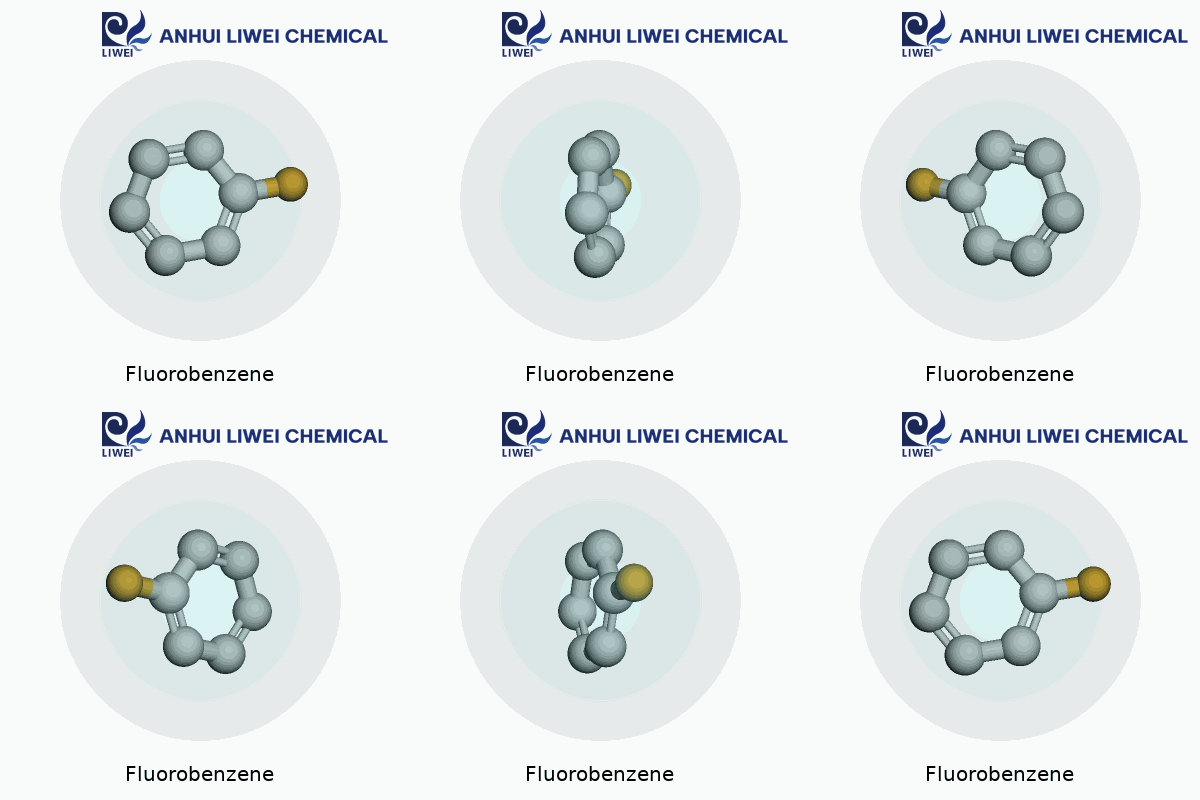
Fluorobenzene comes through in chemistry with a formula of C6H5F. That means six carbon atoms, five hydrogen atoms, and one fluorine atom—all arranged in a way that adds up to much more than the sum of its parts. Most people reading up on chemistry likely see the benzene ring as an old friend, a hexagonal collection of carbons connected with bonds that give a bit of flexibility and a lot of stability. Once fluorine attaches to one of those carbon atoms, the result changes how the ring behaves with other chemicals, making fluorobenzene a unique player in the world of aromatic compounds.
Why the Structure Matters
Looking back to undergrad chemistry labs, handling benzene was a routine part of many organic reactions. The structure of benzene invites substitution because the ring’s electrons move around, offering a stable but reactive site. With fluorobenzene, the benzene core stays, but plugging fluorine into the ring shakes up the electron density. This one little substitution shifts the chemical's entire personality. Engineers and researchers working in pharmaceuticals or agrochemicals see this behavior as a ticket to creating new molecules that might resist breakdown in harsh environments or inhibit enzymes in very specific ways.
The Physical Shape
Shifting to the actual three-dimensional arrangement, fluorobenzene stays flat much like benzene itself. The ring lays out six carbons in a near-perfect hexagon, each one sharing its corners with neighbors. Five of these carbons hook up with a hydrogen, but the sixth gets that fluorine instead. That single fluorine doesn’t just make the molecule look different on paper; it tugs electrons toward itself. Chemists call this effect "electron-withdrawing," which sounds technical but has everyday impact, especially when tuning a compound’s reactivity or toxicity for commercial use.
Why Chemists Care About the Formula and Structure
Years of searching for new medicines and better materials have proven that the smallest change—a single atom swapped—can mean the difference between a blockbuster drug and an inactive dud. Fluorine’s tiny size and strong hold on electrons make it ideal for tweaking properties without blowing up the molecule's size. In practical terms, adding a fluorine atom to benzene lowers the rate at which the molecule gets broken down by biological enzymes. That means longer-lasting effects in everything from weed killers to prescription pills.
Steps Toward Safer Handling and Sustainability
Working around aromatic compounds such as fluorobenzene, safety matters. Inhaling fumes or absorbing through skin can have real consequences. Gloves, goggles, and fume hoods remain the baseline in any lab that takes worker wellbeing seriously. On top of this, the search for greener synthesis uses new catalysts or less-toxic solvents to prepare fluorobenzene with less waste. With industrial output climbing around the world, these small, practical steps in safety and sustainability keep chemists on track to do good science without harming themselves or the planet.
Building on a Simple Formula
Fluorobenzene’s chemical structure—plain at first glance—reminds researchers that innovation often begins with a simple sketch. By knowing exactly where each atom in C6H5F stands, science students and professional chemists unlock a toolbox of possibilities. Fluorobenzene becomes more than a textbook example: it becomes a building block for new ideas in chemistry, health, and the environment.
Why Proper Storage Matters
Some chemicals work quietly in the background, but their impact stretches far beyond the lab. Fluorobenzene stands out as one of those. This isn’t a chemical most people find row after row on household shelves—it belongs mostly in research facilities or plant environments. It’s clear that the way we handle and store these kinds of liquids draws a direct line to lab safety, environmental health, and day-to-day productivity.
From years spent in research work, the best lessons always came from seeing what happens when even a small misstep ripples through a busy lab. Even those little slips with substances like fluorobenzene—colorless, aromatic, smells like almonds—can turn routine days sideways. That’s enough reason to make sure practices follow what science, experience, and sensible regulation tell us.
Simple Storage, Big Payoff
Fluorobenzene doesn’t shout hazardous, but it brings its own bag of risks. It’s flammable and puts off vapors that move quicker than you realize. Letting it sit in the wrong type of container or stashing it in a sun-soaked corner isn’t just lazy: it’s a gamble with people’s safety and company liability.
Here’s where glass or high-quality metal containers do more than just hold the liquid. Polyethylene or PVC won’t cut it—those can soften or degrade under solvent exposure, and no one needs their container to leak. The right container closes tightly, leaving no space for vapors to drift out or moisture to creep in. Always put sturdy labels front and center. Clear labels mean no excuses or confusion if emergencies strike.
For longer-term storage, choose spots designed with air flow and temperature controls. No solvents belong near direct sunlight, heat sources, or open flames. Shelves fitted with lips or rails help keep bottles from falling during bumps or accidental knocks. Every lab veteran has seen what a rolling bottle can cause during an earthquake or even a careless reach.
Ventilation and Segregation—More Than Details
Putting fluorobenzene alongside strong acids, oxidizers, or food and drink supplies walks right into dangerous territory. Keep it locked with other organic solvents, apart from incompatible materials. Locking cabinets at the right height makes it easy to reach but keeps it safe from spills on lower shelves.
A good exhaust fan or vent hood doesn’t just make the air smell cleaner. It keeps unexpected vapor build-ups off the radar. Too many stories start with a tight, poorly run workroom—good ventilation gives everyone a buffer, no matter how tiny the container may seem.
Local fire codes still matter. Most states have straightforward requirements for storing flammable liquids, often limiting the volume in a single space. Too much chemical in one spot stands out fast during inspections. Staying organized goes hand in hand with keeping regulators satisfied. It’s preventive care, just like wearing gloves or goggles—just without the risk of forgetting you ever had them on.
Solutions That Stick
For those in charge, regular training beats last-minute panic. Every staffer—from seasoned chemists to summer interns—should know exactly where and how chemicals like fluorobenzene stay safe. Spill kits sitting close by help avoid the worst-case scenarios, and maintenance logs keep people accountable.
The real win comes from creating habits that don’t feel like chores. Simple steps, done every single time, give everyone confidence that what’s supposed to stay in a bottle, actually does. Safety doesn’t ask for heroism. It just asks for attention and a bit of common sense, every day.
Looking at Fluorobenzene: What Are the Real Risks?
Fluorobenzene often pops up in labs and in the chemical industry. It doesn’t show up much in our daily lives unless you work with chemicals. Still, its use brings up a real question—what are the dangers, both for those who handle it and for people who might be exposed by accident?
The Health Factor
Breathing in fluorobenzene isn’t like breathing in fresh air. Even exposure for short periods can cause headaches, dizziness, and problems with coordination. Longer exposures, especially in places without enough ventilation, can mess with the nervous system or even knock someone out for a bit. Contact with the skin also leads to irritation. Eyes get the worst of it, stinging and watering almost straight away. Medical research points to possible liver and kidney stress from large exposures. So far, there’s not enough evidence to say it causes cancer, but that doesn’t mean it’s harmless at low doses—it just means we don’t have all the answers. Full protective gear belongs in any room where this chemical gets used.
Fluorobenzene In the Environment
Fluorobenzene in the wild doesn’t break down quickly. If a tank spills, the chemical soaks into the ground or heads for the waterways. In water, it can float around for a long time. Fish and bugs can take it in, but it doesn’t build up in their bodies much. That offers little comfort—once it moves into drinking water, people and animals risk getting sick. Rain doesn’t wash it away, and natural bacteria don’t munch through it fast. This quality makes fluorobenzene a stubborn contaminant.
Laws and Protection
Regulators don’t treat fluorobenzene as a household threat. In industries, environmental agencies set limits for air and water. The Occupational Safety and Health Administration flags it as hazardous—so companies must follow rules on handling, storage, and disposal. Anyone working directly with it must use gloves, goggles, and fume hoods. Storage calls for sealed containers, away from open flames or heat, because it can catch fire. Emergency responders hold drills using spilled fluorobenzene as a scenario—it’s a chemical both fire and hazmat teams know well.
Personal View: Why Precautions Matter
Years of working in waste management taught me that small leaks can spiral into big problems. At sites where chemicals were handled carelessly, it wasn’t just an issue for workers. It affected everyone down the line, from people drinking water farther downstream to kids playing in nearby fields. Fluorobenzene’s stubborn nature sticks with me—it doesn’t disappear or break down easily. In one clean-up I witnessed, stubborn solvents like this one lingered in the soil for years, and health complaints from nearby residents followed. It takes real community effort to keep this kind of contamination at bay.
Reducing the Hazard
Better training for workers helps lower the odds of accidents. Companies can switch to safer chemicals when possible. Quick spill response kits and strict disposal rules stop leaks from spreading. Stronger environmental monitoring picks up leaks early, giving communities a chance to stay safe. Long story short, no one should take fluorobenzene lightly. While it lives in the background for most people, its potential health and environmental impacts call for more respect, careful handling, and strict rules.

| Names | |
| Preferred IUPAC name | fluorobenzene |
| Other names |
Phenyl fluoride
Monofluorobenzene Fluorobenzol Benzene, fluoro- |
| Pronunciation | /ˌflʊər.oʊˈbɛn.ziːn/ |
| Identifiers | |
| CAS Number | 462-06-6 |
| 3D model (JSmol) | Fc1ccccc1 |
| Beilstein Reference | 1232614 |
| ChEBI | CHEBI:51123 |
| ChEMBL | CHEMBL11628 |
| ChemSpider | 9713 |
| DrugBank | DB03575 |
| ECHA InfoCard | 100.006.785 |
| EC Number | 207-321-7 |
| Gmelin Reference | Gmelin:100802 |
| KEGG | C06992 |
| MeSH | Fluorobenzenes |
| PubChem CID | 10008 |
| RTECS number | DA0800000 |
| UNII | 7Q7P88S3R3 |
| UN number | 2387 |
| Properties | |
| Chemical formula | C6H5F |
| Molar mass | 96.10 |
| Appearance | Colorless liquid |
| Odor | Benzene-like odor |
| Density | 1.024 |
| Solubility in water | 1.5 g/L at 20 °C |
| log P | 2.27 |
| Vapor pressure | 86.1 mmHg |
| Acidity (pKa) | 40.6 |
| Basicity (pKb) | 23.0 |
| Magnetic susceptibility (χ) | -6.3e-5 |
| Refractive index (nD) | 1.465 |
| Viscosity | 0.587 cP |
| Dipole moment | 1.60 D |
| Thermochemistry | |
| Std molar entropy (S⦵298) | 205.9 J/(mol·K) |
| Std enthalpy of formation (ΔfH⦵298) | -150.6 kJ/mol |
| Std enthalpy of combustion (ΔcH⦵298) | -3128 kJ/mol |
| Hazards | |
| GHS labelling | GHS02, GHS07; Danger; H225, H302, H312, H332, H319, H335; P210, P233, P240, P241, P242, P243, P261, P264, P270, P271, P280, P301+P312, P302+P352, P304+P340, P305+P351+P338, P330, P332+P313, P337+P313, P362, P403+P235, P501 |
| Pictograms | GHS02 GHS07 |
| Signal word | Danger |
| Precautionary statements | P210 P233 P240 P241 P242 P243 P261 P264 P270 P271 P280 P301+P312 P303+P361+P353 P304+P340 P305+P351+P338 P312 P321 P330 P332+P313 P337+P313 P362+P364 P370+P378 P403+P235 P405 P501 |
| NFPA 704 (fire diamond) | 2-3-0 |
| Flash point | -12 °C |
| Autoignition temperature | 460°C |
| Explosive limits | 1.3 - 9.5 vol% |
| Lethal dose or concentration | LD50 oral rat 4600 mg/kg |
| LD50 (median dose) | 3200 mg/kg |
| NIOSH | DA0800000 |
| PEL (Permissible) | 2.5 ppm (10 mg/m3) |
| REL (Recommended) | TWA 2.5 ppm (10 mg/m3) |
| IDLH (Immediate danger) | 1000 ppm |
| Related compounds | |
| Related compounds |
Chlorobenzene
Bromobenzene Iodobenzene Benzene Fluorotoluene Difluorobenzene |


