Dipropylene Glycol: A Deep Dive into an Essential Chemical
Historical Development
Dipropylene glycol has woven itself into many industries since people started exploring new ways to extend the usefulness of glycols in the early twentieth century. Chemical engineers experimented with refining propylene-based glycols, leading to the development of this compound through the controlled hydration and distillation of propylene oxide. Adoption grew steadily in the 1930s and beyond, with the product gaining favor for its low toxicity and diverse solvency properties. Over several decades, chemical refinements improved purity levels and batch consistency, building trust among manufacturers in cosmetics, pharmaceuticals, and industrial chemistry. Access to robust petrochemical feedstocks accelerated its widespread production, allowing suppliers to reach both large-scale and niche markets.
Product Overview
Dipropylene glycol comes from the family of glycols, a group known for their usefulness as solvents or intermediates. Recognized for a nearly odorless and slightly sweet taste, this liquid finds a place in everyday goods such as deodorants, lotions, hydraulic fluids, and more specialized uses, such as ink manufacturing. Because of its low volatility and ability to hold onto water, it plays a stabilizing role in mixtures that otherwise might dry out fast. Producers typically ship it in metal drums or bulk containers, and customers often request certified grades for personal care or food contact—a testament to how trusted this chemical has become.
Physical & Chemical Properties
This clear, colorless liquid sports a molecular formula of C6H14O3 and a boiling point just shy of 232°C. Its density hovers around 1.02 g/cm³, slightly higher than water, which means storage tanks and pipes need to tolerate some added weight. Its freezing point sits low, so water-based blends exposed to cold tend to stay fluid when dipropylene glycol is present. The viscosity runs higher than common solvents like ethanol, lending a certain “body” to mixtures in which it’s used. The compound dissolves in water as well as many organic liquids. Due to its chemical structure, with two secondary hydroxyl groups, it supports enough reactivity for industrial chemistry yet resists the dangers of rapid oxidation or unwanted polymerization.
Technical Specifications & Labeling
Industry standards, like those set by ASTM and ISO, define purity levels and allowable contaminants. Manufacturers typically offer “industrial,” “fragrance,” and “cosmetic” grades, each with requirements for water content, heavy metal traces, and color thresholds. Labels display batch numbers, shelf life, recommended storage temperatures, hazard pictograms, and clear warnings if the product is incompatible with strong acids or oxidizers. Regulatory bodies in the US, EU, and Asia require full traceability, so distributors document the entire supply chain. Certificates of Analysis ride along with each shipment, allowing end users to confirm suitability for delicate applications such as pharmaceuticals or flavorings.
Preparation Method
Producers begin with propylene oxide, which reacts with water under the guidance of either base or acid catalysts. This reaction yields a mix of mono-, di-, and tripropylene glycols, separated by fractional distillation. Dipropylene glycol, the middle product, separates based on its slightly higher boiling point compared with monopropylene glycol. Plant operators monitor temperature and pressure closely to avoid excess byproduct formation. Adjusting catalyst choice and water-to-oxide ratios tunes the output for efficiency or purity. The process does not need high amounts of energy relative to other petrochemical syntheses, which lowers its environmental footprint, especially at well-operated facilities.
Chemical Reactions & Modifications
Dipropylene glycol stands up to most acids and bases, making it a safe carrier for other chemicals. Chemists can esterify it, producing compounds for plasticizers or solvents that show up in specialty coatings or resins. The two secondary alcohol groups serve as attachment points for forming ethers or esters, often chosen for low-toxicity formulations. The compound rarely oxidizes under normal storage, but at high temperatures or with exposure to strong oxidizers, the secondary alcohols convert to ketones and acids. This rarely poses problems in routine applications but matters in high-temperature or reactive environments.
Synonyms & Product Names
Industry insiders recognize several alternative descriptions for dipropylene glycol. Product literature, sometimes, uses abbreviations like DPG or refers to it as (2-(2-hydroxypropoxy)-1-methoxypropan-1-ol). Many suppliers market it under their own trade names, though the underlying chemical structure does not change. In technical documents, names such as “propylene glycol, dipropylene glycol mixture” or “di(propan-2-ol) ether” show up as well. These distinctions help buyers match the right grade to their application, whether it’s for perfume blending, cosmetic emulsions, or as a hydraulic fluid base.
Safety & Operational Standards
Dipropylene glycol rates as mildly irritating to eyes or skin if handled carelessly, though consumption of small amounts does not tend to produce toxic effects. Material Safety Data Sheets spell out the need for gloves and goggles in large-scale use, and ventilation prevents vapors from concentrating indoors during spills. Waste and runoff require treatment before entering waterways; government agencies like EPA and ECHA enforce strict storage and handling regulations. Workers often trust equipment with stainless steel or high-density polyethylene linings, as repeated exposure can degrade less robust materials. Storage should occur at moderate temperatures, sheltered from direct sunlight or severe cold, to preserve both chemical quality and safety.
Application Area
Personal care products rely on this glycol as a solubilizer—perfume and body mist formulations benefit from the way it dissolves scents and retains moisture. In the flavor and fragrance industry, its odorless and tasteless qualities help blend delicate natural extracts or synthetic flavors. Industrial cleaners, antifreeze formulas, deicing fluids, and reactive solvents depend on the compound's stability under various conditions. Some hydraulic and brake fluids gain improved longevity when it’s present as a base or additive. Resins, paints, and inks take advantage of its ability to control flow and evaporation rate, ensuring both user comfort and lasting color. Even pharmaceutical syrups and oral solutions feature it as a carrier for active molecules.
Research & Development
Academic groups and specialty chemical manufacturers continue to explore new modifications of dipropylene glycol, searching for better performing derivatives that remain safe for humans and the environment. Recent studies have focused on optimizing esterification techniques, resulting in plasticizers with even greater flexibility and reduced migration. Work on green chemistry aims to curb energy needs and improve recyclability of glycol-based products, especially as industries look for ways to comply with stricter regulations. Novel uses for dipropylene glycol-based materials are cropping up in battery electrolytes, biodegradable lubricants, and textile finishes, which suggests future market growth for both classic and next-generation forms.
Toxicity Research
Toxicological studies on dipropylene glycol show low acute toxicity in both animals and humans. The body metabolizes most ingested amounts into common metabolic products. Chronic exposure studies have shown minimal carcinogenic, mutagenic, or teratogenic effects, bolstering its reputation as a relatively benign compound compared with other glycol ethers. Allergic responses can occur in rare cases, especially with prolonged skin exposure, making patch testing a wise step for people with sensitive skin. Federal safety guidelines set occupational exposure limits and require respiratory protection in environments where mists can accumulate, such as spray painting operations. Ongoing research has shifted toward understanding any long-term ecological impacts as manufacturers increase output and expand use into new markets.
Future Prospects
Growing attention to sustainability is reshaping demand for glycol derivatives, and dipropylene glycol stands poised for further innovation. Producers see opportunities to adapt manufacturing steps to non-petroleum raw materials, cutting both emissions and energy use. As consumer goods manufacturers raise standards for ingredient safety and transparency, demand for high-purity, traceable dipropylene glycol continues to climb. Biotechnology firms are beginning to test engineered microbes that could streamline glycol synthesis, suggesting cost savings and novel blends down the road. Regulatory changes may also prompt reformulations in personal care and industrial applications. All signs point to deeper integration of dipropylene glycol in technologies requiring stable, flexible, and low-toxicity solvents, whether in green chemistry, health products, or advanced manufacturing.
What’s Making This Ingredient So Popular?
If you pick up a bottle of your favorite lotion or cologne, chances are dipropylene glycol shows up on the label. It's one of those behind-the-scenes ingredients, not flashy, but quietly important. Years ago, I noticed it showing up in both household and beauty products, which got me thinking: why do companies keep using it over and over?
Experience tells me that it works because it blends well without causing irritation for most people. Dipropylene glycol doesn’t come with a strong smell or color, so it fades into the background and lets scents or active ingredients shine. This isn’t just a perk for fragrance fans; manufacturers get a lot of flexibility by having a base that doesn’t interfere.
Why It Matters in Cosmetics and Skin Care
For anyone sensitive to heavy creams, this liquid keeps things light. It attracts water, which means it helps your lotions and serums stay smooth and moist on your skin. The benefit really hits home after a day on the go—your skin still feels soft rather than sticky. It’s not just in fancy department store bottles, either. Drugstore brands use it to keep products budget-friendly and pleasant.
There's been worry over time about safety in personal care ingredients. Health authorities in the US, Canada, and Europe have all checked dipropylene glycol. Used as intended in consumer products, the evidence says it’s about as harmless as you could expect. Allergies are rare. Even so, I wouldn't chug a bottle or rub straight chemical on skin, and neither should anyone else. Everything in life needs common sense.
How Fragrance Makers Lean on It
Think about walking past a row of scented candles, each one releasing a clear and memorable aroma. Dipropylene glycol helps carry those scents out into the air. Without it, perfumes and air fresheners lose some of their punch or end up overwhelming the nose. It spreads fragrance molecules evenly, so you catch a full whiff instead of a harsh, uneven note.
From years living with two dogs and a teenager, room sprays have rescued me more than once. You’d be surprised how many of those sprays and diffusers rely on this one ingredient to do their job without clinging to furniture or leaving a weird residue on the walls.
Industry Beyond the Bathroom
It's easy to think these chemicals belong only at home, but there’s more to the story. Dipropylene glycol finds work in printing inks and hydraulic fluids. Its chemical stability means it holds up under stress. Manufacturers can trust that their equipment or inks won’t break down or start gumming up after a few months.
In the world of plastics, it keeps things moving smoothly. Even in some e-cigarette liquids—though there the discussion about health is ongoing, with much stricter views on what’s safe over time—dipropylene glycol shows up. Regulations often lag behind science, so it’s on both consumers and watchdog groups to keep the pressure on for transparency.
Pushing for Better Practices
Plenty of people want alternatives that are safer for health and the environment. Research keeps turning up new solutions. Plant-based options can sometimes replace standard chemicals, but cost and supply hold them back. More oversight, solid safety studies, and honest labeling help people choose with confidence.
It pays to read up, ask questions, and look for brands that share real information. Dipropylene glycol won’t go away tomorrow, but learning where and why it's used clears the air—so we're not guessing about what touches our skin or scents our homes.
What Dipropylene Glycol Does in Your Products
Open any bottle of moisturizer or fragrance and there’s a decent chance you’ll spot dipropylene glycol on the label. This colorless liquid pulls double duty by helping dissolve other ingredients and keeping formulas smooth. Personal care brands pick it for a reason: it carries scents well, absorbs fast, and rarely leaves a sticky feel. My own bathroom shelf has seen plenty of creams and serums with it, especially those boasting a lightweight texture.
Looking at Skin Safety
Safety matters when something spends hours against your skin. Researchers and toxicologists have run plenty of checks on dipropylene glycol. Their findings show this chemical scores low in irritation — even on sensitive or broken skin. The Cosmetic Ingredient Review panel, which weighs safety for everyday items, reviewed available data and gave it a clean bill for rinse-off and leave-on use at standard concentrations.
A patch test with pure dipropylene glycol didn’t bring out redness or swelling for the vast majority of volunteers. The rare times a reaction did occur, folks already had a known sensitivity to glycols in general. Trust me, as someone who struggles with a temperamental face during allergy season, I’m always reading labels for culprits like propylene glycol or butylene glycol. I’ve never faced an issue from formulations using dipropylene glycol at typical levels.
Concerns Floating Around
Plenty of shoppers hear “chemical” and pause, which makes sense in an age of ingredient scrutiny. Some headlines lump glycols together and make them sound scary. The truth is, not every glycol behaves the same. Dipropylene glycol doesn’t release formaldehyde or add to product toxicity in the ways some other chemicals historically did. ScienceDirect and PubChem describe it as low on the hazard scale, especially compared to alternatives used in industrial settings.
Anyone prone to eczema or allergy flares might notice reactions from new beauty products, but pinpointing dipropylene glycol as the culprit remains rare. Dermatologists have found that most cases involve other, harsher preservatives or fragrances. Of course, no single ingredient suits every skin type. If you’re navigating conditions like psoriasis or extreme dryness, patch testing never hurts. I learned that the hard way, swiping a dab behind my ear before using anything new.
Industry Habits and Regulations
Big-name skin care and fragrance brands keep dipropylene glycol around for predictable reasons. They want ingredients that are well studied, show little risk, and perform consistently. The European Commission clears it for use in cosmetics without restrictions on concentration. The US Food and Drug Administration echoes that approach. These approvals come after piles of studies on skin absorption, long-term exposure, and allergic reactions.
Choosing Products Wisely
Shoppers today speak up and push brands to rethink chemicals that don’t serve a clear purpose. From my own routines and research, I’ve seen many clean-beauty products skip anything unnecessary, but most won’t banish an ingredient unless the data suggests a concrete risk. If you prefer to avoid synthetic chemicals, alternatives like glycerin and natural plant extracts fill a similar role in some formulas. Still, dipropylene glycol sits far from the usual suspects that drum up trouble.
Smart purchasing means checking ingredient lists and reading up on what each item does. Trust your skin’s feedback, ask questions at the pharmacy or dermatologist’s office, and don’t get spooked by words you can’t pronounce. In the long run, focusing on solid evidence keeps the guesswork out of safe skin care.
Similar Names, Real Differences
At first glance, dipropylene glycol and propylene glycol look almost identical. Their names lead a lot of folks to think they do the same job. If you've spent time reading ingredient lists on perfumes, lotions, or even engine coolants, both end up popping up sooner or later. Still, these are two distinct ingredients, and knowing which one does what helps when safety or product quality matters.
Propylene Glycol: The Familiar Friend
Propylene glycol, often found in food and personal care products, ranks high for its ability to keep things moist and blended. You find it in baked goods as a humectant. It appears in everything from cookie dough to toothpaste. It gets into medicines as a carrier and even ends up in vape juices. The FDA recognizes propylene glycol as safe for most uses, though it's not totally free from controversy. Some people get skin irritation or allergic reactions, especially those with sensitive skin. There’s also a never-ending debate online about how much is too much. The scientific consensus, though, shows propylene glycol leaves the body pretty quickly, so for most people, it doesn't build up and cause lasting harm.
Dipropylene Glycol: A Different Role
Dipropylene glycol doesn’t have the same fame in food circles, but in perfumes and cosmetics, it plays a big part. It helps dissolve ingredients that don’t mix easily, making sure perfumes last longer and lotions stay smooth. It feels less sticky and has a milder scent than propylene glycol, so it works well in products you put on your skin. The toxicity profile for dipropylene glycol actually looks slightly better—studies point to lower irritation and a gentler impact on skin in cosmetic dosages. That’s why it pops up over and over in high-end perfume formulas. The kicker? It’s not cleared for food use in most countries. So you won’t see it in your pantry—but the bottle on your bathroom shelf might feature it front-and-center.
Facts Matter—Choosing the Right Ingredient
Mixing these two glycols up could end in disaster for a small business. Say you’re brewing flavored simple syrups for a café, grabbing dipropylene glycol by mistake would ruin your batch and risk customers’ health. Getting these basics right keeps trust with customers, which everyone in business learns early. On the other hand, for someone composing a perfume, propylene glycol could make the scent evaporate too fast. They choose dipropylene glycol on purpose to make their formula linger when someone wears it.
Solutions and Safe Practices
What always worked best for me, whether in formulating a DIY lotion or reading ingredient lists, has been a simple rule—checking the label, doing a basic web search, and looking up the guidelines set out by the FDA or the European Chemicals Agency. If you run a business, solid tracking of raw materials and supplier transparency helps avoid mix-ups. Education doesn’t stop with pros: even hobbyists benefit from double-checking what each glycol can and cannot do, as safety guidelines change with new scientific research. The more informed the team and the consumer, the safer everyone stays.
Conclusion
The short story: propylene glycol stays popular in foods and medicines, while dipropylene glycol claims its spot in perfumes and cosmetics. Each has its strengths and weaknesses, and choosing the right one hinges on safety and the needs of a finished product. Trust grows when producers and consumers know the difference, respect regulations, and keep learning from reliable studies.
Getting to Know Dipropylene Glycol
People often overlook the magic behind a good perfume. Everyone loves a long-lasting scent, but only a handful consider what keeps that favorite fragrance sticking to the skin. Dipropylene Glycol, or DPG, quietly plays a big part in this story. Perfume makers, both big brands and home crafters, reach for DPG because it mixes well and helps scents go further.
Why Perfumers Reach for DPG
DPG works as a solvent. It helps carry the fragrance oils, spreading them evenly and making sure the nose gets the intended blend of notes in each sniff. My own time experimenting with scents at home taught me to avoid “hot spots” in blends, where some notes hit you all at once. Adding DPG smooths those edges.
Besides better blending, DPG feels light and soaks into the skin without leaving a sticky patch. That matters to anyone who doesn’t want their clothes or watchband getting slick after a spray. In large-scale perfume labs, DPG has saved more than a few batches from separation or sediment clumping at the bottom of bottles.
Safety Checks and Worries
Safety always matters, especially for something we put right on our bodies. The good news is that major health authorities, including the Cosmetic Ingredient Review expert panel, have looked at DPG in personal care. They found it doesn’t cause problems for most folks, though some people with very sensitive skin might notice irritation. Here’s what stands out: DPG has low odor on its own, so it won’t mess up delicate perfumes. I learned early to avoid solvents with strong background scents. Even a faint chemical smell can ruin a rose or jasmine blend, but DPG keeps the original scent true.
Why DPG Isn’t Always the Perfect Pick
DPG makes some things easier, but not every perfumer chooses it. A handful of high-end brands prefer pure alcohol as their main carrier. Certain oils dissolve better in alcohol, and the finished scent can feel more vibrant. Also, alcohol evaporates fast, giving that first “pop” when you spray it on skin, while DPG lingers longer. That can mean a perfume sits closer and lasts through the day. For people who want a room to smell good, DPG-blended fragrances can “hang” in the air longer than alcohol-based sprays, which can be an upside or a downside depending on the intention.
Looking Ahead: Sustainability and Alternatives
Eco-conscious shoppers ask questions now that barely got a glance years ago. DPG comes mainly from petroleum refining, so anyone chasing a green label will be looking for plant-based or biodegradable alternatives. Some newcomers, like MCT oil or natural sugar alcohols, show promise. Those options still have to prove they can do everything DPG does, like dissolving tough essential oils, feeling weightless, and playing nice with all skin types.
Until something better takes over, DPG will keep holding a prized spot on the perfumer’s countertop. Its track record speaks through bottles in stores and home stashes. The bottle might not say “contains DPG,” but its reputation for smoothing edges and keeping fragrance true has quietly changed how we all experience scent.
Why This Chemical Matters
Most people don’t walk into a store and check for dipropylene glycol on a label, but they’d be surprised to find it in many things around them. It turns up in perfumes, skin care, deodorants, and even industrial products. The concern comes up most often because folks wonder if this chemical could be a hidden danger, especially if it gets swallowed or breathed in.
What Science Says About Dipropylene Glycol
Dipropylene glycol is one of those colorless, nearly odorless liquids you’d never expect to cause harm in everyday situations. Research shows that, in most consumer goods, the amount used is far below levels known to trigger health issues. This chemical gets cleared by the body pretty quickly—animals and human volunteers both pass it through urine. Toxicologists at the U.S. National Institutes of Health point out that the liver and kidneys break it down effectively when small amounts enter the body, which keeps risks low for most adults.
Problems can show up when someone swallows a much bigger dose than what’s used in personal care products or accidentally breathes in vapor in unventilated industrial settings. High doses in laboratory studies created symptoms like dizziness, muscle unsteadiness, and, if someone keeps getting exposed, potential kidney stress. Still, these symptoms needed far higher amounts than anyone would get through perfume or hand cream. When it hits the lungs as vapor, only huge exposures have caused reports of mild irritation, such as coughing or headache.
Protecting Kids and Pets
Despite the relative safety for adults, kids and pets have smaller bodies that deal with toxins less efficiently. Even a splash in the mouth of scented lotion or accidental gulp from an open container could make a child sick. Emergency room records and poison control centers see cases each year where small children swallow personal care products. In those rare cases with dipropylene glycol, symptoms stay mild—nausea or tiredness—but these incidents build a case for keeping all chemicals out of reach.
Why Regulation and Labeling Matter
Government agencies like the FDA and EPA have set limits for dipropylene glycol in consumer products. Regular review from scientific committees in North America and Europe monitor its safety and adjust recommendations as research fills in the gaps. These rules help keep typical cosmetic and cleaning products below dangerous levels for everyone. But without obvious warnings on a bottle, people might get complacent about what goes on their skin or sits under the sink. One lesson from my own cabinet cleanup: if a label lists a chemical and you don’t know what it is, take a minute to look it up.
Keeping It Safe at Home and Work
The risk grows much higher in settings where workers handle drums or vats of dipropylene glycol as a raw material. Proper ventilation, gloves, and eye protection should be the bare minimum in workplaces. First responders need accurate chemical labels to know how to treat accidental exposure. For everyday users, the safest route lies in locking up personal care items and cleaning products, following package directions, and treating every chemical with a bit of healthy respect—no matter how gentle it sounds on the label.
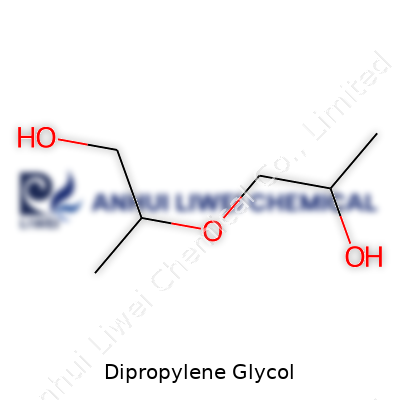
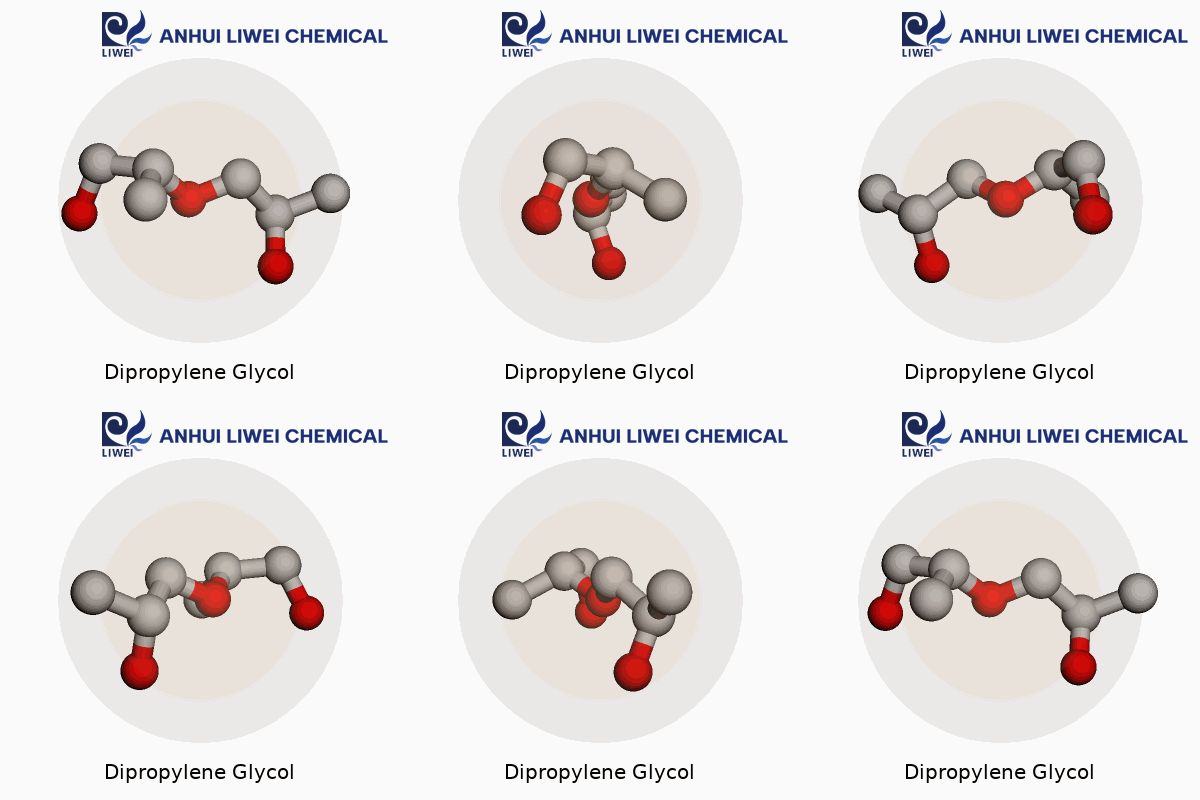
| Names | |
| Preferred IUPAC name | 1-(2-hydroxypropoxy)propan-2-ol |
| Pronunciation | /daɪˌprəʊpɪliːn ˈɡlaɪkɒl/ |
| Identifiers | |
| CAS Number | 25265-71-8 |
| 3D model (JSmol) | CC(O)COCC(C)O |
| Beilstein Reference | 1698378 |
| ChEBI | CHEBI:44840 |
| ChEMBL | CHEMBL2106438 |
| ChemSpider | 13837169 |
| DrugBank | DB09303 |
| EC Number | '246-770-3' |
| Gmelin Reference | No Gmelin Reference |
| KEGG | C14656 |
| MeSH | Dipropylene Glycol |
| PubChem CID | 32742 |
| RTECS number | UB8760000 |
| UNII | 0A897O650S |
| Properties | |
| Chemical formula | C6H14O3 |
| Molar mass | 134.17 |
| Appearance | clear, colorless, viscous liquid |
| Odor | slight, characteristic odor |
| Density | 1.023 g/mL at 20°C |
| Solubility in water | Miscible |
| log P | -0.4 |
| Vapor pressure | 0.02 mmHg at 20°C |
| Acidity (pKa) | 14.8 |
| Basicity (pKb) | -0.2 |
| Magnetic susceptibility (χ) | -9.51e-5 cm^3/mol |
| Refractive index (nD) | 1.439 |
| Viscosity | 75 mPa·s @ 25°C |
| Dipole moment | 2.3 D |
| Thermochemistry | |
| Std molar entropy (S⦵298) | 318.8 J/mol·K |
| Std enthalpy of formation (ΔfH⦵298) | -729.0 kJ/mol |
| Std enthalpy of combustion (ΔcH⦵298) | -3685.5 kJ/mol |
| Hazards | |
| Signal word | Warning |
| Hazard statements | No hazard statements |
| Precautionary statements | P261 P280 P305+P351+P338 P313 P501 |
| NFPA 704 (fire diamond) | 1-1-0 |
| Flash point | 138°C (280°F) |
| Autoignition temperature | 370°C |
| Explosive limits | Lower explosive limit: 0.9 vol%, Upper explosive limit: 3.8 vol% |
| Lethal dose or concentration | LD50 oral rat 14,850 mg/kg |
| LD50 (median dose) | 14800 mg/kg |
| NIOSH | UB8785000 |
| PEL (Permissible) | No OSHA PEL established. |
| REL (Recommended) | Not established |
| IDLH (Immediate danger) | Not established |
| Related compounds | |
| Related compounds |
Propylene Glycol
Tripropylene Glycol Dipropylene Glycol Methyl Ether Ethylene Glycol Diethylene Glycol Monoethylene Glycol Butylene Glycol Propylene Glycol Methyl Ether |


