Cyclohexanone: A Down-to-Earth Look at a Crucial Chemical
Historical Development
Long before nylon stockings and high-performance plastics, cyclohexanone found its place in the chemical world. Its roots trace back to the late 19th century as chemists pushed for new routes from coal tar and petroleum. Industry carved the first large-scale channels in the 1940s, ramping up with the postwar boom in synthetic fibers and plastics. Early on, the Oxidation of Cyclohexanol or Cyclohexane stood out as the go-to method. Companies in the US, Europe, and later Asia, saw its value not just for the textile industry but for paint, solvents, and adhesives. Over time, the market for cyclohexanone mirrored society’s hunger for durable, affordable products. Even now, it keeps evolving as demands for cleaner feedstocks and green chemistry rise.
Product Overview
Ask anyone in plastics or coatings about cyclohexanone and they’ll tell you it’s as practical as they come—a clear, oily liquid with a bit of a sharp, peppermint-like odor. Its primary use still points to making nylon intermediates, specifically adipic acid and caprolactam. Compared with other similar solvents, cyclohexanone brings a solid balance of solvency and boiling point, making it easier to handle in industrial settings. As with many chemicals, the stuff gets shipped in drums, tanks, and bulk containers, labeled according to national and international rules. Over time, its presence in pharmaceuticals and electronics has only grown, not by accident but through the simple, stubborn utility it delivers to chemists and manufacturers.
Physical & Chemical Properties
Cyclohexanone looks like a clear, colorless liquid at room temperature and boils at about 156°C. Its density sits around 0.95 g/cm³, and it dissolves with ease in alcohol and ether but only sparsely in water. Its vapor, heavier than air, sweeps low across floors, while its flammable nature keeps manufacturers on their toes. Its chemical make-up, a six-membered ring with a single ketone group, creates a backbone that’s sturdy yet reactive. That ketone function opens doors for all kinds of transformation in the lab—whether through reduction, oxidation, or nucleophilic addition.
Technical Specifications & Labeling
Producers stamp their drums with minimum purity levels, water content, and allowable trace impurities—think iron, acetic acid, and benzene. Typical grades reach 99.5% purity or better, since a trace of water or acid can throw off polymerization down the line. Safety information sets out UN numbers and GHS pictograms, while European and US laws spell out requirements for workers handling, storing, and transporting this chemical. Clear, upfront labels prevent costly mistakes, especially as cyclohexanone can hide its bite beneath a subtle scent.
Preparation Method
The main roads to cyclohexanone still start from cyclohexane or phenol. Oxidizing cyclohexane with air, often using cobalt salts as catalysts, stays popular for its efficiency. The process usually nets cyclohexanol at the same time, which plants can then dehydrogenate or oxidize cleanly to cyclohexanone. Large players, from Dow to BASF, favor processes that recycle unreacted feedstocks and wring out every bit of value. On a lab bench, the oxidation of cyclohexanol with common oxidizers gives small batches for research. No matter the route, safety controls keep operators ahead of runaway reactions or hazardous mixtures, especially given the product’s reactivity and toxicology.
Chemical Reactions & Modifications
If you hand cyclohexanone to a skilled chemist, watch the reactions unfold. Its ketone group takes on reductions to cyclohexanol or stretches into new bonds through Grignard additions. Reacting with amines forms oximes and hydrazones, prime intermediates in agrochemicals or drugs. Cyclohexanone slots neatly into Baeyer–Villiger oxidations, giving ε-caprolactone, a key growth area for biodegradable plastics. Simple alkylations or halogenations further add to its roster, letting manufacturers tailor products downstream. Few can dispute the versatility cyclohexanone brings to synthetic chemistry—its structure both accessible and reactive, bridging old paths and new market needs.
Synonyms & Product Names
People in the industry swap other names for cyclohexanone—calling it Pimelin ketone, Ketohexamethylene, or Names like Hägerman Ketone show up in historic texts. Product labels from various countries may show Cyclohexanone, UN 1915, or EC 203-631-1. Researchers use shorthand like CYC for test batches or pilot runs. These variations don’t just reflect history—they help operators track quality, compliance, and inventory worldwide.
Safety & Operational Standards
Walk into any factory handling cyclohexanone and the first thing you see is the safety board. Regulations keep things straightforward: cyclohexanone burns fiercely and vapors can spark without warning. Workers suit up with gloves, goggles, and well-ventilated gear. OSHA, NIOSH, and European agencies agree on exposure limits and handling rules. Engineering controls, explosion-proof equipment, and regular training stay in place. Medical research links overexposure to headaches, skin and eye irritation, and chronic effects after long stretches, so workplaces run monitoring and emergency drills. Cyclohexanone’s tight rules may feel strict, but they keep accidents to a minimum by treating it with the respect earned from decades of lessons learned.
Application Area
Industry calls on cyclohexanone mainly for the production of nylon, where it feeds two mainstays: adipic acid and caprolactam. These then go toward fibers, containers, engine parts, and carpets. Paint producers know it as a strong solvent for resins and coatings—a step above acetone or MEK when deeper solvency makes a difference. Farms use derivatives for pesticides, while drug companies transform cyclohexanone into intermediates for active compounds. In electronics, specialty cleaning and photoresist applications grow each year as precision standards ratchet up. This broad reach means every uptick or dip in downstream sectors echoes in demand from cyclohexanone, so shifts in textiles, automobiles, or consumer goods always matter.
Research & Development
Research labs keep seeking greener pathways, turning to bio-based oxidation or chemoenzymatic methods that blend sustainability with good yields. Trends now focus on lowering waste, boosting atom economy, and swapping out legacy catalysts for less toxic alternatives. Process optimization runs on the back of computational chemistry and scale-up studies. Universities and startups chase novel uses or ways to recycle cyclohexanone byproducts. For me, seeing open innovation between firms and academics promises not just incremental gains, but the new breakthroughs the market has missed.
Toxicity Research
Safety studies run deep on cyclohexanone, drawing from decades of workplace exposure and new animal testing. Most acute effects hit the central nervous system after inhalation or skin contact, causing drowsiness, headaches, or nausea. Chronic exposure, even at lower levels, links to liver and kidney changes in laboratory animals. Yet, no conclusive evidence points to carcinogenicity at typical workplace concentrations, something regulators watch closely. Companies must run routine air monitoring, medical surveillance, and provide personal protective gear as routine, not afterthoughts. Every incident and scientific paper helps dial in safer thresholds, making today’s workspaces far safer than those early days.
Future Prospects
Cyclohexanone travels a road now lined with challenges and opportunity. Growing demand for sustainable plastics steers research into renewable feedstocks and biodegradable derivatives. Pressure to cut greenhouse gas emissions sparks investment into closed-loop and low-emission manufacturing. Markets across Asia keep expanding, giving the chemical new territory. For environmentalists and young chemists alike, the push is clear: greener production methods, smarter regulation, tighter safety protocols. It’s not just market demand but a collective sense that industry owes a cleaner, safer generation of materials for the future. By keeping a keen focus on responsible sourcing, energy use, and the development of safer alternatives, cyclohexanone can stay relevant—serving as both a warning and a guide for chemical progress worldwide.
Behind the Curtains of Everyday Life
Walk into any hardware shop or supermarket. Nylon ropes, clothing, toothbrush bristles, tarps—these feel ordinary. Cyclohexanone shapes all these products long before they hit the shelves. This solvent shows up early during the making of nylon, serving a critical role in the transformation from raw chemicals into strong, useful materials.
From Labs to Factories
A chemist mixing up cyclohexanone quickly learns one thing: handle with caution. Its odor cuts through a lab like nail polish remover, but with heavier undertones. Factories across the world rely on it for scale. About 95 percent of cyclohexanone made each year feeds one hungry application—nylon-6 and nylon-66. Caprolactam and adipic acid pop up as the main products after processing cyclohexanone, and these compounds end up as tough plastics and fibers.
Beyond the world of nylon, cyclohexanone works quietly as a solvent for resins, paints, and adhesives. Ever stripped old varnish or worked with wood glue? The product probably spun through a tank of cyclohexanone on its way to your workbench. Some pharmaceutical makers use it as an intermediate, especially for sedatives, hormones, and even herbicides. The versatility keeps demand steady, and it makes chemists double-check their storage protocols: cyclohexanone’s volatile nature poses risks for fire and fumes.
Risks Hidden in Plain Sight
Rolling barrels of cyclohexanone through a chemical plant looks routine to veterans, but improper handling leads to serious trouble. It evaporates fast, creates flammable atmospheres, and long-term skin contact triggers irritation. Factory safety officers work hard to keep levels in the air below standards—OSHA sets exposure limits at 25 parts per million. In some regions, illegal dumping and leaks spark environmental fears. Waterways can become contaminated. Aquatic life suffers, and it doesn’t take a major spill for damage to show up.
Modern factories tie chemical processes into closed systems. This keeps emissions low and recycles as much solvent as possible, but leaks still make headlines. In 2022, a significant spill in India sent several workers to the hospital. News like this pushes regulators to check compliance, and it reminds consumers that cleaner processes start with informed oversight.
Where Solutions Grow
Some manufacturers switch to less hazardous solvents or switch up equipment to reduce human contact. Investment in fume hoods, better filtration, and airtight pipes brings clear benefits: fewer workplace injuries and a lighter footprint on the planet. On the innovation front, researchers test catalysts that let producers make nylon precursors at lower temperatures or with fewer toxic byproducts. As greener technology gains ground, the goal grows clearer—build a world where the benefits of synthetic materials come without damaging health or ecosystems.
Cyclohexanone won’t leave the chemical landscape soon. Its role in plastics and industrial solvents keeps it essential. But careful management, smart engineering, and attention to public health will steer its story. The challenge for industry and science lies in keeping the useful parts without turning a blind eye to the messier side of progress.
Chemical in the Factory – and What It Means for Workers
Factories use cyclohexanone for nylon production, paint removers, and cleaning products. It’s a colorless, oily liquid with a sharp, acetone-like smell that hits the nose the moment a drum is opened. People who work shifts near mixing tanks or who handle solvents have likely crossed paths with this chemical, even if they didn’t realize it. Exposure is more common than many would guess, especially in manufacturing zones.
Direct Exposure: The Main Worry
My work near solvents left my hands dry and cracked, and sometimes I’d get headaches after long hours on the floor. Cyclohexanone gets into the body through breathing, skin contact, or swallowing. Short-term exposure can make eyes water, give a burning sensation in the throat, cause dizziness, and mess with coordination. Longer, high-level exposure might even damage the liver and kidneys. NIOSH and OSHA both list cyclohexanone as hazardous, not just with scary fine print but with actual limits for how much can linger in the air at work sites.
What Science Says
The CDC ranks cyclohexanone as a moderate health hazard – symptoms can develop quickly if the safety rules aren’t followed. Studies on animals show liver and kidney impacts after repeated or prolonged exposure. In humans, headaches, irritability, and stomach issues tend to show up in places where the air isn’t ventilated. Cyclohexanone doesn’t have the reputation of some of the worst industrial chemicals, but that’s often because it slips under the radar, not because the effects are weak.
Staying Safe at Work
In my experience, people get comfortable with routine, and that’s when corners get cut. A simple splash can go unnoticed until skin turns red. It makes sense to wear gloves and goggles even for short clean-ups. A good ventilation system pulls fumes away from people’s faces. Regular air monitoring with handheld devices – like the ones our safety officer used to carry around – keeps exposures in check. When companies skip these steps, risks jump up fast.
Why Everyone Should Be Alert
You don’t need a Ph.D. to see that repeated chemical headaches aren’t part of a healthy job. OSHA limits cyclohexanone exposure to 25 parts per million over an eight-hour shift, yet older factories and temp jobs sometimes look the other way. The focus isn’t only for big plants; garage mechanics and even artists who use certain cleaning supplies can run into this chemical.
Simple Fixes Make the Difference
Companies often invest more in production than in safety. Free handwashing stations, proper gloves, and clear labels help keep workers safe. Training must happen every year, not just at hiring. Managers need to listen when someone reports a chemical smell or a rash instead of brushing it off. Inspection agencies offer guides and free resources, yet many small business owners don’t realize how simple improvements save headaches later, both physical and legal.
Final Thoughts
Cyclohexanone belongs on the list of chemicals workers should treat with respect. It doesn’t spark panic like some toxic substances, but long-term exposure brings real health problems. Up-to-date safety training, gear, and open conversation go a long way. I’ve seen firsthand that most issues come from not knowing or not caring, and both are problems that can be fixed.
Understanding Cyclohexanone’s Identity
Chemistry often starts simple and gets complicated fast. Cyclohexanone carries the chemical formula C6H10O. Sounds dry at first, but this small molecule gives life to a lot of everyday items. I’ve seen its direct impact not only in textbooks, but through industries that shape the things we use at home and on the job.
Practical Side of the Formula
The arrangement shows six carbon atoms joined in a ring—cyclohexane—with one oxygen atom attached, forming a ketone group. This little tweak in the structure shifts cyclohexanone from just another ring hydrocarbon to something quite different—an active ingredient in powerful industrial processes. During my stint in a plastics manufacturing facility, cyclohexanone came up so often you’d think it belonged in the break room fridge.
What’s really special about C6H10O is its ability to serve as a solvent. When dissolving resins or polymers for coatings, a strong, dependable solvent makes all the difference. Strings of raw material break down easily and chemical reactions keep moving. Cyclohexanone makes the science run efficiently, translating lab theory into scalable business production.
Driving Force in Nylon Production
Think about the clothes you wear: nylon shirts, socks, bags. Cyclohexanone sits at the crossroads of making nylon-6, one of the world’s most common synthetic fibers. Factories churn out cyclohexanone by blowing air through cyclohexane, then mix it with chemicals to get caprolactam, the monomer that eventually spins into nylon. I remember reading early industry safety manuals—people used to handle cyclohexanone with little protection, learning the hard way that shortcuts don't pay off. Modern protocols reflect years of trial, error, and sometimes painful lessons.
Environmental and Health Considerations
Some chemicals bring headaches, literally and figuratively. Cyclohexanone’s strong odor cues you in quickly. Inhaling its vapors can irritate your nose, throat, and lungs. Spills don’t just disappear—they end up in soil and water, affecting both workers and the local ecosystem. The U.S. Occupational Safety and Health Administration sets a workplace exposure limit, reminding us that long-term safety gets determined by careful regulation, not luck.
Studies from the National Institute for Occupational Safety and Health warn about organ damage from prolonged exposure. Avoiding careless dumping and airborne release is crucial. Factories these days use closed systems and invest in solid ventilation—easy upgrades that protect jobs and health alike.
Moving Toward Safer Chemistry
We depend on cyclohexanone, but staying responsible means investing in better handling and looking for less hazardous alternatives. In my experience, keeping workers involved in training and safety decisions leads to fewer mistakes, fewer accidents, and lower long-term costs. Research into green chemistry looks for substitute processes, with a push toward safer solvents and bio-based routes. These shifts help meet growing environmental standards, keeping production humming while reducing harm.
Final Thoughts
Cyclohexanone isn’t just a formula in a book; it’s the backbone of a host of practical goods. Everything from your toolbox handles to automotive parts and clothing pulls from this humble molecule. Understanding what it does, how it’s made, and the responsibilities attached to its use lets us keep shaping the modern world without turning a blind eye to safety and sustainability.
Understanding Cyclohexanone’s Nature
Cyclohexanone stands out in the world of chemicals for its strong, acetone-like odor and a clear, oily look. It plays a huge part in making nylon, paints, and other products many people use every day. Despite its usefulness, this stuff demands careful storage, mostly because of its flammability and ability to irritate skin, eyes, and lungs. Anyone handling it ought to approach the job with respect. Lessons learned from both industry pros and local labs make it clear: slip-ups can turn a routine day into a crisis fast if proper precautions are overlooked.
The Basics Matter Most
People sometimes overlook simple storage rules, thinking fancy ventilation systems and alarms solve every problem. In reality, a poor storage decision spells trouble. It pays to check that cyclohexanone sits in a tightly sealed steel or high-quality plastic container that shows zero damage or leaks. Choosing the right spot in facilities makes all the difference—think cool, shaded, and free from sunlight since heat and UV break the chemical down, ramping up the risk of vapors and decomposition.
Reducing Hazards Beyond Labels
Putting up hazard signs or warnings is just one piece of the puzzle. Real safety means thinking beyond labels. Vapors from cyclohexanone get heavy and can settle low. A spill or leak easily finds floor drains or cracks, spreading the danger. Keeping containers off the floor, away from foot traffic and drains, goes a long way. It’s smart to position containers far from heat sources—pilots, radiators, steam pipes—and away from chlorine, acids, or oxidizers. Mixing those can spark violent reactions or even fires.
Personal Experience: Why Routine Checks Save Headaches
Years working alongside lab managers in manufacturing taught me that most accidents come down to boredom with “routine.” Someone assumes yesterday’s check covers today’s risks. Cyclohexanone may slowly eat at seals on old containers, so every week, run quick visual checks for stains, strong odors, or cracks. It’s also not overkill to keep spill kits and fire extinguishers within arm’s reach. There’s no glory in skipping drills or ignoring leaking containers—that’s just betting against the odds.
Airflow and Spills: Overlooked Protectors
Proper ventilation trumps most DIY fixes. Relying only on a cracked window or shared industrial fan isn’t enough. A real exhaust hood or localized sucking system pulls fumes away from everyone’s lungs and keeps concentrations well below danger levels. Accidents will still happen, so quick action counts: every worker who handles cyclohexanone should know the difference between a paper towel and an absorbent pad. Training should be hands-on, not PowerPoint slides nobody remembers.
Final Word on Secure Storage
Tough rules might sound like a hassle until you’ve seen a fire or health scare up close. Respect for chemicals like cyclohexanone asks for more than signs and checklists. It’s the day-to-day habits, regular checks, and open conversations that keep everyone healthy and businesses running smoothly. From chemical warehouses to small college labs, proper storage means thinking ahead, taking responsibility, and never cutting corners.
What Cyclohexanone Looks and Feels Like
Cyclohexanone pours out as a clear, colorless liquid with a faint, sweet smell that's not unlike acetone but a bit more greasy. Its texture feels oily between the fingers. Most folks in a chemistry lab or any factory handling solvents would recognize its odor right away. It’s noticeably heavier than water, which gives you a sense of how it settles when it meets other liquids.
Why Boiling Point and Melting Point Matter
The boiling point for cyclohexanone reaches about 155°C. That’s hotter than water by a long shot, which shapes how experts store and use it. A slow simmer instead of a quick vaporization. Its melting point hovers near -31°C. So, in nearly any normal room, cyclohexanone stays liquid. This comes in handy in places that need solvents year-round without fussing over whether things freeze up.
That boiling range tells real stories in industrial settings. In nylon production and coatings, knowing exactly how and when cyclohexanone evaporates means fewer surprises with leaks and losses. Keeping things right, temperature-wise, prevents headaches with workplace safety and product waste.
Handling Flammability and Safety
Anyone who uses cyclohexanone should take its flash point seriously. It can catch fire at about 43°C. This puts it well within reach of ordinary temperatures in a busy shop or a hot outdoor work yard. Vapors don't just stay put; they drift, and it takes just a spark to set them off. Inside a storeroom or on a production line, tight control and proper ventilation stay on the must-do list. The National Fire Protection Association (NFPA) rates it as moderately flammable, a reminder to never handle it with a lit cigarette or faulty wiring nearby.
How Cyclohexanone Mixes and Moves
Cyclohexanone dissolves well with lots of solvents—think alcohols, esters, and ethers—but turns up its nose at water. Only a small amount will dissolve in water at room temperature. This quality shapes its use in making adhesives, paints, and chemical syntheses where you don’t want things mixing in unplanned ways. Picture a painter wanting a strong, even finish without worrying about rainwater spoiling the formula.
It also evaporates faster than folks expect from an oil-like liquid. Its vapor pressure keeps climbing with temperature, so open tanks or spills can quickly fill the air with vapor. OSHA has set exposure limits to guard against headaches, dizziness, and other health risks. Anyone out on the work floor needs to know that just because you don’t see the liquid, those vapors can still be hanging around.
Density and Viscosity: Impact on Operations
Cyclohexanone’s density clocks in around 0.95 g/cm³. It sits below water’s density, but not by much. This matters when it spills or mixes with other stuff in tanks. Its viscosity, a measure of its thickness, lets it flow smoothly without looking syrupy. Technicians prefer this because the liquid transfers easily through pipes and valves, cutting down on clogs and reducing pump wear.
People sometimes overlook the practical details until a process starts acting up. For example, a too-thick liquid slows production; too thin can splash and spill. Cyclohexanone strikes a balance that factory crews have come to depend on for steady, predictable results.
Solutions for Safer, Smarter Use
Proper training in safe handling and protective equipment stands out as the first defense against chemical mishaps. For folks in labs or industry, chemical storage rooms benefit from temperature control, spark-proof switches, and air movement to handle vapor build-up. Regular checks on storage containers prevent leaks and unexpected exposure, while investing in spill containment gear stays smart for emergencies.
Anyone working with cyclohexanone soon learns these qualities aren’t footnotes—they affect productivity, safety, and environmental protection every day. Keeping a sharp eye on the small details keeps equipment running, workplaces safer, and products coming out right the first time.
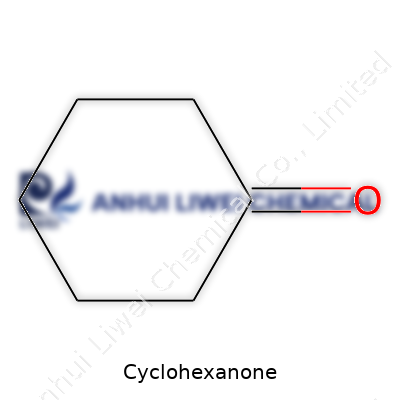
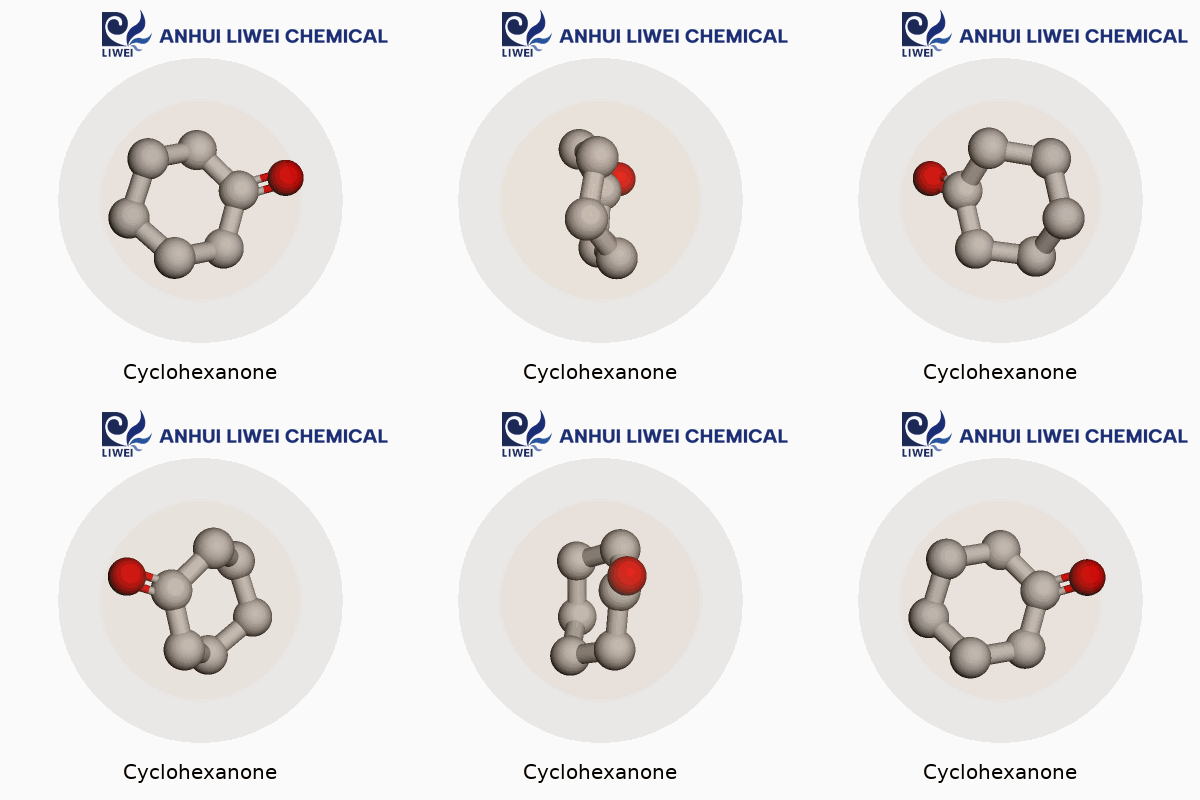
| Names | |
| Pronunciation | /ˌsaɪkloʊˈhɛksənoʊn/ |
| Identifiers | |
| CAS Number | 108-94-1 |
| 3D model (JSmol) | C1CCC(=O)CC1 |
| Beilstein Reference | 507606 |
| ChEBI | 17865 |
| ChEMBL | CHEMBL18801 |
| ChemSpider | 7687 |
| DrugBank | DB02086 |
| EC Number | 203-631-1 |
| Gmelin Reference | 100346 |
| KEGG | C00414 |
| PubChem CID | 8761 |
| RTECS number | GW1050000 |
| UNII | 5QOR3L6J6Z |
| UN number | 1915 |
| Properties | |
| Chemical formula | C6H10O |
| Molar mass | 98.15 g/mol |
| Appearance | Colorless liquid |
| Odor | peppermint-like, sweet, ketone odor |
| Density | 0.9478 g/cm³ |
| Solubility in water | 8.7 g/100 mL at 20°C |
| log P | 0.81 |
| Vapor pressure | 5.1 mmHg at 25 °C |
| Acidity (pKa) | 16.7 |
| Basicity (pKb) | 20.8 |
| Magnetic susceptibility (χ) | -60.8 × 10^-6 cm^3/mol |
| Refractive index (nD) | 1.4507 |
| Viscosity | 2.02 cP |
| Dipole moment | 3.0 D |
| Thermochemistry | |
| Std molar entropy (S⦵298) | 230.7 J/mol·K |
| Std enthalpy of formation (ΔfH⦵298) | -270.7 kJ/mol |
| Std enthalpy of combustion (ΔcH⦵298) | -3519.7 kJ/mol |
| Hazards | |
| GHS labelling | GHS02, GHS07; Signal Word: Danger; Hazard Statements: H226, H302, H312, H332, H319; Precautionary Statements: P210, P233, P240, P241, P242, P243, P280, P303+P361+P353, P370+P378, P403+P235, P501 |
| Pictograms | GHS02 GHS07 |
| Signal word | Warning |
| Hazard statements | H226 H302 H312 H332 H319 |
| Precautionary statements | P210, P233, P240, P241, P242, P243, P261, P264, P270, P271, P280, P301+P312, P302+P352, P303+P361+P353, P304+P340, P305+P351+P338, P312, P330, P332+P313, P337+P313, P362+P364, P370+P378, P403+P235, P405, P501 |
| NFPA 704 (fire diamond) | 1-2-0 |
| Flash point | 44 °C (closed cup) |
| Autoignition temperature | 420°C |
| Explosive limits | 1.1% - 9.4% |
| Lethal dose or concentration | LD50 (oral, rat): 1535 mg/kg; LD50 (dermal, rabbit): 948 mg/kg; LC50 (inhalation, rat): 8 mg/L/4h |
| LD50 (median dose) | 1535 mg/kg (oral, rat) |
| NIOSH | NIOSH REL: TWA 25 ppm (100 mg/m3) [skin] |
| PEL (Permissible) | 50 ppm (200 mg/m3) TWA |
| REL (Recommended) | TWA 25 ppm (100 mg/m³) [skin] |
| IDLH (Immediate danger) | 700 ppm |


