1,2-Hexanediol: A Closer Look at a Workhorse Chemical
Historical Development
Story of 1,2-Hexanediol traces back to mid-twentieth century laboratories, where researchers hunted for stable glycols useful across synthetic and consumer spaces. Chemists recognized early on that diols, with their versatile hydroxyl groups, could steer innovation in cosmetics, coatings, and polymers. After initial work focused on short-chain diols and glycerol, the attention turned to medium-chain diols, seeking to balance water-solubility with oil miscibility. As industry branched into personal care and high-performance materials, methods for producing 1,2-Hexanediol improved, scaling up in response to surging global demand from formulators and manufacturers.
Product Overview
1,2-Hexanediol comes as a clear, colorless liquid with a mild, almost undetectable scent. It belongs to the family of dihydric alcohols. In factories and research labs, technicians appreciate its stability and gentle handling requirements compared to more volatile solvents. With a six-carbon backbone, this compound slips comfortably into a host of blends, enhancing everything from facial creams to transformers’ coolants. Its partial solubility in both water and oil phases lets formulators skip separate emulsifiers, reducing complexity and cost. Demand for this glycol keeps growing, tracking rising consumer interest in “less toxic” alternatives to harsher preservatives.
Physical & Chemical Properties
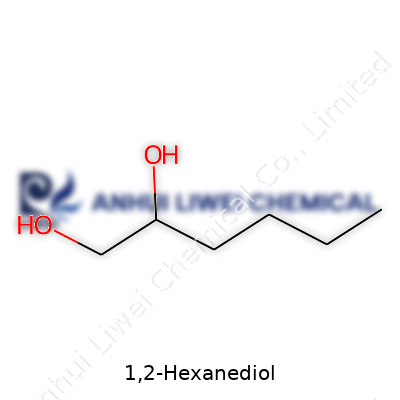
With a molecular formula of C6H14O2 and molar mass close to 118.17 g/mol, 1,2-Hexanediol features two primary hydroxyl groups positioned at the first and second carbon atoms. It holds a melting point at just around -60°C, and a boiling point circling 224°C, findings that make it valuable in products exposed to both freezing and high heat. Two hydroxyls ensure high reactivity with both acids and bases, increasing its versatility in chain reactions and cross-linking processes. Its specific gravity sits at roughly 0.94 at room temperature. Engineers working with it observe its mixable nature with a range of other solvents, giving it leverage for utility in diverse industries.
Technical Specifications & Labeling
Producers supply 1,2-Hexanediol with certified minimum purity levels—often greater than 98 percent—since impurities can disrupt product performance or safety profiles. Packaging demands tight sealing and moisture-resistant materials, as exposure to atmospheric moisture changes viscosity and destabilizes the product. On chemical drums and retail containers, labels must clearly list the IUPAC name, standardized hazard icons, UN shipping number (UN 3082 for environmental hazard), and official certifications from global regulatory bodies. Batch-specific certificates detail spectroscopic data, heavy metal content, and microbiological testing results, allowing end-users transparency from purchase to production.
Preparation Method
Industrial pathways to synthesize 1,2-Hexanediol usually start from 1,2-epoxyhexane via hydrolysis or from catalytic hydrogenation of 1,2-hexanedione. The hydrolysis method relies on strong acids or bases, adding water across the epoxy ring. For larger scale needs, producers prefer hydrogenation, using specialty metal catalysts (like Raney nickel) under controlled high pressure, which keeps byproducts low. Synthetic-style chemists sometimes experiment with biocatalytic conversion routes, leveraging engineered enzymes to boost sustainability by cutting down harsh reagents and maximizing atom efficiency. Over the past decade, bioprocessing has gathered steam—driven by eco-labeling demands and dual pressure from green chemistry movements and tighter regulations on petrochemical process wastes.
Chemical Reactions & Modifications
Two hydroxyl groups at adjacent positions let 1,2-Hexanediol participate in a slate of reactions: esterification with carboxylic acids builds diester plasticizers; etherification crafts new surfactants. Sulfation, phosphorylation, and alkoxylation spawn new ingredients for lubricants and specialty detergents. Chemical engineers harness its reactivity for cross-linking in polymer synthesis, tailoring hardness and flexibility in coatings and adhesives. In my experience working with resin chemists, introducing 1,2-Hexanediol into the backbone can control both water-resistance and final mechanical strength, making the compound a handy lever in formulations spanning household products to automotive interiors.
Synonyms & Product Names
Across countries and supply chains, 1,2-Hexanediol turns up under several names. The CAS registry number 6920-22-5 helps clear up confusion, but common aliases include Hexane-1,2-diol, 1,2-Dihydroxyhexane, and even Hexylene glycol, though the last term often refers generically to similar diols (such as 2-methyl-2,4-pentanediol, so careful reading of technical sheets matters). Marketing departments in cosmetics and personal care sometimes list it under INCI (International Nomenclature of Cosmetic Ingredients) as HEXANEDIOL, making regulatory diligence key for accurate identification in finished products.
Safety & Operational Standards
Handling guidelines reflect low acute toxicity and limited skin or eye irritancy, but manufacturers recommend gloves, goggles, and splash-resistant clothing to avoid accidental contact. Long-term, low-level exposure data still show relative safety, but research on breakdown products or impurities, particularly in heated industrial processes, underscores the importance of robust ventilation and monitoring. Fire risk remains minimal due to high boiling point, though in bulk storage, leak containment plans must exist to prevent ecological release. Safety data sheets include emergency measures for accidental spillage, and global conventions like REACH, TSCA, or K-REACH set out clear expectations for labeling, transportation, and permissible exposure limits. Consistent audits and updated training lower hazards for both staff and neighboring communities.
Application Area
Personal care dominates—this compound functions as a humectant, solvent, mild antimicrobial, and even as a “booster” for other preservatives. Creams, lotions, shampoos, toners, and even sunscreen sprays carry it, partly for its smooth feel and emollient finish. Beyond cosmetics, 1,2-Hexanediol finds steady work stabilizing hydraulic fluids, enhancing polymer performance, and keeping inks homogenous in wide-format printers. Manufacturers building water-based resins use it to manage drying time and surface tack. I’ve seen R&D teams in electronics leverage its moderate polarity to enable key coating performance in high-voltage insulation. These applications keep growing, earned by both function and trust in its relatively gentle safety profile compared to older glycols.
Research & Development
Researchers keep digging into new ways to harness 1,2-Hexanediol. Trends in green chemistry drive work on biosourced inputs—trying to ferment feedstocks from waste sugars or plant oils to sidestep petrochemical origins. Other teams focus on nanoemulsions for drug delivery, using its solvent power to dissolve actives into clear, stable preparations. Polymer scientists study its dual hydroxyls for next-gen thermoplastics or smart adhesives that can self-heal or change properties based on humidity. The broader push for sustainable, safer chemicals keeps laboratory and pilot plant doors busy, as companies line up for innovation that offers both cost and environmental wins.
Toxicity Research
Toxicologists have run both in vitro and in vivo studies, often looking at skin contact, inhalation, and ingestion. Most findings show low irritation and no chronic organ damage at exposure levels faced in consumer products or factories. Yet, vigilance never drops—new studies test for subtle allergic reactions or long-term effects from radio-labeled metabolites. Environmental researchers keep an eye on breakdown in water and soil, aiming to understand persistence and risk to aquatic life. Ongoing work, especially with biotransformation pathways, targets not just the parent molecule but also any potential persistent organic pollutants or endocrine activity from impurities or degradation.
Future Prospects
1,2-Hexanediol’s future seems bright, with sustainable production and intelligent applications gaining momentum. Regulatory landscapes guide both ingredient use and greener processing, so innovation will chase safer, lower-impact methods—biotechnological conversion, waste valorization, and solvent reuse. Beauty and personal care brands tout simple ingredient lists, driving further transparency and high-purity sourcing. Advanced materials engineers test how this glycol can stretch the limits of polymers, gels, and composites. From climate concerns to performance breakthroughs, demand for workhorse diols isn’t falling anytime soon—so companies with clean, efficient supply chains and creative lab teams stand to gain.
A Common Ingredient in Everyday Products
Step into any skincare aisle, and you’ll find ingredients lists that look more at home in a chemistry lab than a bathroom cabinet. One name that keeps showing up is 1,2-hexanediol. This colorless glycol doesn’t make headlines, but it has become a staple for product formulators who want effective, long-lasting, and gentle products. Its main strength lies in its ability to act as both a humectant and a preservative booster.
Helping Skin Products Work Better
In the world of skincare, 1,2-hexanediol draws water from the air to the skin. This helps keep skin hydrated, giving it that plump, healthy feel many people chase in moisturizers and serums. If you live somewhere dry or spend a lot of time under air conditioning, having moisturizers with good humectants makes a difference. Nobody wants to spend money on products that feel nice for five minutes then leave skin dry by lunchtime.
But moisture isn’t all it brings to the table. On its own, 1,2-hexanediol doesn’t do much against bacteria or fungi. Blended with other preservatives, it supports the mix and reduces the risk of irritation. Some preservatives can trigger allergies or sensitivity when used at higher levels, so companies prefer to use low amounts of potent preservatives and back them up with ingredients like 1,2-hexanediol. Science backs this up; research shows this compound boosts the power of common agents like phenoxyethanol and ethylhexylglycerin. Keeping products safe isn’t just about bragging rights. It’s a real public health issue—contaminated creams can cause infections, especially for babies or anyone with compromised skin.
Behind the Scenes in Cosmetics and Beyond
There’s more to it than just keeping skin soft. 1,2-hexanediol makes life easier for chemists during formulation. Some ingredients don’t mix well with water or oil. This glycol bridges the gap, helping everything blend smoothly, so products look and feel good straight from the pump or jar. Thicker creams feel silkier, gel textures don’t separate, and users get a product that just works.
Outside skincare, its track record continues. Hair conditioners, cleansers, makeup removers, and sunscreens all lean on its qualities. Some manufacturers in textiles and plastics turn to 1,2-hexanediol to improve softness or prevent unwanted microbial growth. Safety studies show low rates of irritation, making it a strong choice for sensitive applications.
Environmental and Health Concerns
No ingredient has a perfect record. Questions often come up about a chemical’s impact on people and the planet. So far, 1,2-hexanediol hasn’t shown worrying signs of toxicity or harm in cosmetic use. European and US safety panels regularly update recommendations and, so far, limits allow its use without strict warning labels. Still, the beauty industry needs to keep examining sourcing and safety. Some batches of raw materials may lead to impurities or byproducts. Companies focused on “clean beauty” want transparency on how each component is produced—from start to finish.
Eco-conscious shoppers also wonder about wastewater, breakdown in the environment, and whether these molecules collect up in waterways over time. The demand for greener chemistry means labs are searching for ways to make production more responsible, cutting back waste and using more sustainable routes.
What Buyers Should Know
For anyone reading ingredient lists, a familiar compound like 1,2-hexanediol signals a company’s focus on lasting quality and mildness. People concerned about sensitivities should always patch test new products, but seeing this glycol in a formula rarely rings alarm bells for dermatologists. As transparency increases and science reveals more about our daily products, it pays to know what goes into them—and why common but overlooked ingredients like 1,2-hexanediol deserve a closer look.
Understanding 1,2-Hexanediol’s Role in Skincare
Standing in an aisle lined with moisturizers, serums, and cleansers, trying to make sense of their long ingredient lists, 1,2-hexanediol pops up more often than one might expect. Brands often use it as a humectant or a preservative booster, but it rarely gets the spotlight. For years, I reached for products with complicated ingredient decks, not thinking much about what each one does to skin—until a family member developed contact dermatitis. That sparked my curiosity about the stuff inside the bottle, particularly overlooked ingredients like 1,2-hexanediol.
What Does Science Say?
Cosmetic chemists add 1,2-hexanediol to help formulas stay fresh and support hydration. This chemical grabs onto water and helps keep skincare from growing harmful microbes. Major health authorities such as the Cosmetic Ingredient Review (CIR) and the European Commission accept 1,2-hexanediol at concentrations up to 5%. Several peer-reviewed safety assessments and industry toxicology panels consider this concentration to be well tolerated by human skin.
For most healthy adults, 1,2-hexanediol rarely triggers irritations or allergies. Dermatology research journals, such as Contact Dermatitis, report very few documented cases of reactions linked to this compound—even though thousands of people have been patch tested in cosmetic safety studies. Most reports blame other substances for outbreaks when multiple ingredients appear together.
The Personal Side of Skincare Safety
Skin health runs deeper than just reading reports, though. A patch that’s dry, flaky, or reactive sees ingredients in a different way. Some people—particularly those with eczema, rosacea, or compromised barriers—may notice stinging or redness after using formulas with any synthetic diol, including 1,2-hexanediol. The risk multiplies if that person stacks several layered products at once. My own sensitive skin struggles during cold months, and fragrances or unnecessary extras seem to set it off more than a stable diol ever has. Still, it’s good sense to start slow, checking for discomfort before slathering on something new.
Transparency and Trust in Ingredient Choices
Trusted ingredient sources count for a lot. Reputable beauty companies rely on third-party lab testing, clear labeling, and ingredient traceability to bridge the trust gap between science and shoppers. Brands that share their sourcing and safety data build confidence. I keep an eye out for transparent labeling and batch information. An open-door approach from a manufacturer signals respect for both the buyer and the process. That step alone helps avoid surprises like hidden contaminants or ingredient swaps.
Consumer Solutions and Future Steps
Shoppers have more power over their skin than labels sometimes suggest. Resources like the Environmental Working Group (EWG) Skin Deep Database and peer-reviewed medical journals make it easier to research concerns around any cosmetic chemical, including 1,2-hexanediol. Double-checking claims straight from verified sources ensures that marketing buzz doesn’t drown out the voices of real-world dermatologists and safety panels. Open communication with a dermatologist always trumps guesswork, especially for anyone managing persistent redness, rashes, or allergies.
A balanced approach—listening to scientific consensus, noticing personal reactions, expecting transparency, and questioning lofty claims—goes farther than worrying about a long name on a bottle. Experience and evidence both point toward 1,2-hexanediol’s safety for most users. If something feels off on your own skin, keeping things simple and discussing options with a health professional remains the smartest path.
Why 1,2-Hexanediol Matters for Skin Care
People shopping for moisturizers, serums, or even cleansers usually check the ingredient list. One name popping up more these days is 1,2-hexanediol. This clear, odorless liquid promises more than it suggests. 1,2-Hexanediol helps give products a soft, pleasant feel and acts as a trusty preservative. Unlike older preservatives, which often spark worry, this compound balances safety and performance. I remember growing up with creams that turned weird colors or smelled off after a month—the product’s shelf life just couldn’t keep up. Companies choosing 1,2-hexanediol bring that peace of mind both for users and retailers.
Power as a Moisturizing Agent
Ingredients get buzz when they make skin feel softer or help beat dryness. Glycerin holds that reputation, but 1,2-hexanediol deserves some credit. Its molecular structure lets it attract water, so skin holds onto moisture longer. That effect stands out in face masks or lotions claiming a dewy finish. Dry patches smooth out over time, and the difference shows after steady use. In my case, switching to products with this humectant meant flakiness around the nose just stopped flaring up in the winter. The impact is more than marketing.
Push Toward Safer Preservation
Cosmetics share shelf space with air, humidity, and curious fingers. That’s the recipe for bacteria and mold to sneak in. Years ago, brands relied on parabens or formaldehyde-releasing agents. Over time, concern grew about long-term exposure, even if risks were sometimes exaggerated online. 1,2-Hexanediol steps in as a less controversial option. Tests show it controls microbial growth in creams and makeup without that sharp smell or stickiness older preservatives bring. Most personal experience matches what research shows: fewer breakouts tied to spoiled creams, and skin feels calm post-application. It’s not just about keeping products fresh—it protects skin from things you’d never even see. A 2019 study in the International Journal of Cosmetic Science found it worked just as well as traditional ingredient combos, which means fewer hurdles for formulators and better outcomes for customers.
Compatibility With a Range of Formulas
Some people shy away from new ingredients, assuming they might clash with their favorites or make things feel greasy. 1,2-Hexanediol sidesteps that problem. It mixes into gels, toners, sunscreens, and is gentle on skin. People with sensitivities look for formulas with fewer irritants, and this ingredient rarely sets off a reaction. Online communities point to fewer reported flare-ups when compared to older options. The ingredient also works alongside vitamin C, retinoids, and peptides—a real plus for anyone layering products. Brands find it easier to create simple, clean-label lines customers trust.
Raising Standards in Cosmetic Science
Consumer demand for transparency and safety keeps brands on their toes. Using 1,2-Hexanediol sends a message: this product avoids outdated additives. More dermatologists support this direction, as recent conferences confirm there’s little evidence tying the ingredient to long-term side effects. My own testing routine has shifted to bottles I’m less worried about leaving open. The benefit of longer freshness, improved comfort, and better compatibility should not be underestimated. It’s not about chasing the next “miracle” ingredient, but choosing compounds with documented safety and real performance.
The Curious Role of 1,2-Hexanediol in Cosmetics
Walk down any beauty aisle and scan the ingredient list of moisturizers, serums, sunscreens—you’ll spot 1,2-hexanediol tucked among the unpronounceables. Some people spot “-diol” and believe it’s just there as filler. Others label it a preservative. That’s where confusion starts.
My early days in formulating left me poking around labels, trying to decode what every piece did. Ingredients like 1,2-hexanediol felt mysterious—never labeled as the hero, yet rarely missing. My curiosity pulled me toward the research. What makes this substance so common?
What Does 1,2-Hexanediol Actually Do?
1,2-hexanediol acts as a humectant. It grabs onto water, holding moisture on your skin. In the same breath, it’s pinged as a “preservative booster.” It doesn’t kill germs at low concentrations the way parabens or phenoxyethanol do, but it makes life a little tougher for bacteria and yeast trying to thrive in a lotion bottle. Not quite a solo act as a preservative—think of it more as the reliable sidekick. By disrupting microbial membranes, it teams up with true preservatives, boosting their punch.
The European Commission’s Cosmetic Ingredient Database lists it as a “solvent and humectant.” That’s a dry technical answer, but real-world testing shows when formulators include 1,2-hexanediol, the shelf life of a product tends to climb—especially when it comes to formula stability, consistency, and microbial safety.
Preservative or Not?
The regulations hold the answer. The U.S. Food and Drug Administration (FDA) and its European peers set strict guidelines for what counts as a primary preservative. 1,2-hexanediol isn’t officially listed among these. If someone wanted to use only this ingredient for preservation, it wouldn’t pass most challenge tests (where products get loaded with microbes to check how fast they die).
Still, peer-reviewed studies confirm that adding it to a system packed with other antimicrobial agents—think phenoxyethanol, ethylhexylglycerin—can cut down the total amount of harsh preservatives needed. Brands chasing gentler, “clean” skincare jump at this advantage. Less preservative in the mix, less risk of irritation, more smiles on sensitive faces.
Consumer Safety and Labeling Transparency
Consumers want answers about what lands in their products. I’ve talked to plenty of folks who worry about skin allergies, and the idea of mystery chemicals adds to the anxiety. Evidence from cosmetic safety reviews gives 1,2-hexanediol a clean bill of health at current usage concentrations—usually below 5%. Still, the transparency wobble comes when companies gloss over how much is doing what in a product. Open labeling practices matter. Everyone deserves to know whether an ingredient really works behind the scenes to protect a formula or simply lends a hand.
What Could Help?
Companies could be more clear with ingredient education. Instead of tossing “preservative” and “booster” into the mix, it helps to spell out their real role in the formula and the reasoning behind low-dose strategies. Consumer trust grows with helpful comparison charts and third-party safety results. Sharing ongoing results from product challenge tests would keep anxious buyers in the loop.
For anyone worried about allergic reactions or sensitivities, patch testing matters. No ingredient is one-size-fits-all, no matter what agencies declare. My experience says you learn the most by listening to your own skin, reading up on what every ingredient does, and picking brands that treat the customer as a partner, not a mystery shopper.
The Buzz About 1,2-Hexanediol
Scan the ingredient list on your moisturizer or serum, and you might spot 1,2-hexanediol. This clear, slightly oily liquid helps prevent your favorite products from spoiling and delivers that silky texture most of us love. Over the years, it’s been getting a lot of play in formulations because it's known for its moisturizing and antimicrobial properties. With more skin and makeup companies using it, some people are starting to ask: can it actually cause allergic reactions? That’s a fair question, given that anything you put on your skin, from aloe to lanolin, can spark a surprise.
The Science and Reports So Far
You’ll see 1,2-hexanediol in all sorts of personal care goods, from cleansers to sunscreens. Research consistently shows it’s generally tolerated by most folks—especially compared to more notorious preservatives like parabens or formaldehyde releasers. The Cosmetic Ingredient Review panel, along with European safety agencies, looked through plenty of data and flagged it as safe up to concentrations of 5%. If people experienced irritation, it usually showed up during “patch tests,” and less than 1% of those tested had any bad reaction.
That being said, no ingredient gets a gold star for never causing problems. Even ingredients thought to be gentle, like 1,2-hexanediol, can occasionally trip up. Dermatologists sometimes see rare cases where someone develops a mild rash, redness, itching, or swelling. Eczema-prone folks, or those with already sensitized skin, seem to have a higher chance of flare-ups after exposure to products with this ingredient.
Why Skin Can Act Up
So what's behind these rare reactions? Skin acts as the body’s front-line defense, but it’s also an unpredictable organ. Sometimes, the barrier gets compromised—maybe because of winter dryness, harsh scrubs, or long-term steroid use. Once that protective layer goes wobbly, ingredients that are low-irritant on paper, like 1,2-hexanediol, can sneak past and meet immune cells itching for a fight. Then you’re dealing with an angry red patch, despite using products marketed as safe for sensitive skin.
People like me, navigating tricky eczema for years, become cautious label-readers. After a single bad week where everything from my shampoo to my hand lotion seemed to burn, I learned to not take “hypoallergenic” claims too literally. Patch testing new products along the inside of your arm—before slathering on cheeks or eyelids—sometimes saves a lot of grief. If redness shows up, then tweaking the routine gets easier, and skin stress levels stay manageable.
Where Responsibility Falls
Most brands use 1,2-hexanediol in low amounts, sticking to levels considered safe by global regulations. They keep detailed incident records and reformulate products when clusters of complaints crop up. Dermatology clinics contribute their experience by reporting even rare cases in the medical literature, so other professionals know what to look for if a patient rolls in with a mysterious rash. The cooperation between regulators, scientists, doctors, and brands means the knowledge base around these ingredients keeps growing.
Minimizing Risks and Managing Concerns
People with sensitive skin or a history of allergic reactions do best by testing new products in small amounts. Read labels, ask questions if something stings or itches. Dermatologists have tools to sort out if 1,2-hexanediol is really the culprit—or if it’s something else sharing the bottle. Skincare is personal, and meeting your skin where it’s at each day keeps reactions in check. Until a new superstar preservative comes along, 1,2-hexanediol seems here to stay—but that doesn’t mean you have to ignore your skin’s signals. Listen to your skin, not just the hype, and you’ll dodge most ingredient-related headaches.
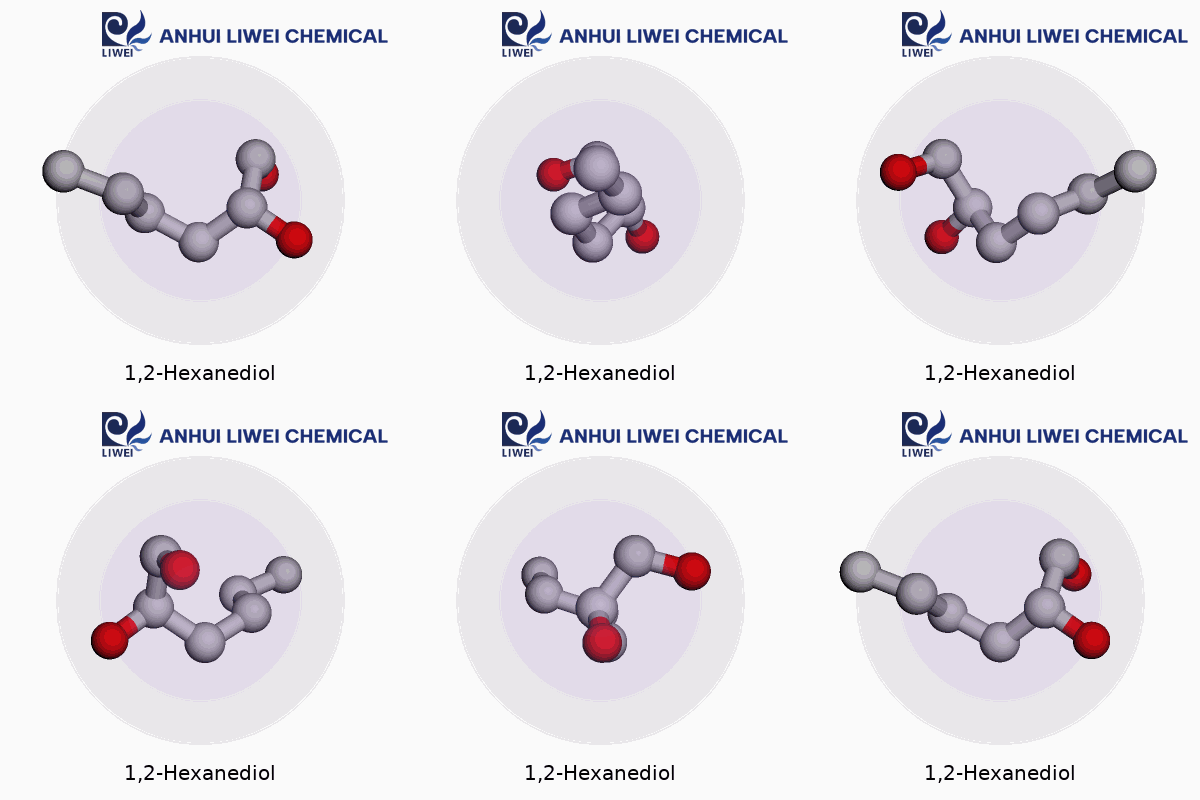
| Names | |
| Preferred IUPAC name | hexane-1,2-diol |
| Other names |
1,2-Dihydroxyhexane
Hexane-1,2-diol 1,2-Hexylene glycol n-Hexane-1,2-diol |
| Pronunciation | /ˌwʌn.tuː.ˌhɛk.seɪn.ˈdaɪ.ɒl/ |
| Identifiers | |
| CAS Number | 6920-22-5 |
| 3D model (JSmol) | CCCCC(O)CO |
| Beilstein Reference | 1719547 |
| ChEBI | CHEBI:43077 |
| ChEMBL | CHEMBL3188034 |
| ChemSpider | 21106424 |
| DrugBank | DB14104 |
| ECHA InfoCard | 100.030.154 |
| EC Number | 230-029-6 |
| KEGG | C14541 |
| MeSH | 1,2-hexanediol |
| PubChem CID | 10874 |
| RTECS number | MO2200000 |
| UNII | X3DRH4X1P7 |
| Properties | |
| Chemical formula | C6H14O2 |
| Molar mass | 118.176 |
| Appearance | clear liquid |
| Odor | mild, sweet |
| Density | 0.951 g/cm³ at 20°C |
| Solubility in water | 50 g/L |
| log P | 0.8 |
| Vapor pressure | 0.01 mmHg at 25 °C |
| Acidity (pKa) | 14.8 |
| Basicity (pKb) | 16.5 |
| Magnetic susceptibility (χ) | χ = -89.0 × 10^-6 cm^3/mol |
| Refractive index (nD) | 1.437 |
| Viscosity | 66 mPa·s |
| Dipole moment | 2.1 D |
| Thermochemistry | |
| Std molar entropy (S⦵298) | 337.6 J·mol−1·K−1 |
| Std enthalpy of formation (ΔfH⦵298) | -570.7 kJ/mol |
| Std enthalpy of combustion (ΔcH⦵298) | -3797.6 kJ/mol |
| Hazards | |
| Main hazards | Causes skin irritation; causes serious eye irritation |
| GHS labelling | GHS labelling: Signal word: Warning. Hazard statements: H315 (Causes skin irritation), H319 (Causes serious eye irritation). Precautionary statements: P264, P280, P302+P352, P305+P351+P338, P332+P313, P337+P313, P362+P364. Pictograms: GHS07. |
| Pictograms | GHS07 |
| Signal word | Warning |
| Hazard statements | H315; H319 |
| Precautionary statements | P264-P280-P305+P351+P338-P337+P313 |
| NFPA 704 (fire diamond) | NFPA 704: Health 1, Flammability 1, Reactivity 0 |
| Flash point | 102°C |
| Autoignition temperature | 330°C |
| Explosive limits | Lower explosive limit: 1.1 vol%; Upper explosive limit: 11.1 vol% |
| Lethal dose or concentration | LD50 oral rat 5000 mg/kg, LD50 dermal rabbit >2000 mg/kg, LC50 inhalation rat >5.5 mg/L/4h |
| LD50 (median dose) | LD50: 5000 mg/kg (rat, oral) |
| NIOSH | No NIOSH REL/IDLH established for 1,2-Hexanediol. |
| REL (Recommended) | 1.0 - 5.0% |
| IDLH (Immediate danger) | Not established |
| Related compounds | |
| Related compounds |
1,2-Butanediol
1,2-Pentanediol 1,2-Octanediol 1,2-Decanediol 1,6-Hexanediol 2-Methyl-2,4-pentanediol |


